Showing posts with label viruses and microbes. Show all posts

Thursday, November 15, 2012

Science & SF Tidbits: Best science journalism and rosy futures

Recent reading:

AAAS - Winners Named in Science Journalism Awards »

The American Association for the Advancement of Science announced the winners of the 2012 AAAS Kavli Science Journalism Award Competition. The winners include:

Carl Zimmer, for publication in a "Large Newspaper" (New York Times)
Michelle Nijhuis, for publication in a magazine (Smithsonian)
 Sarah Holt and Laurie Donnelly for "In Depth Reporting" on TV (WGBH/NOVA)
See the announcement for the full list of winners and some back story about how their stories were written.

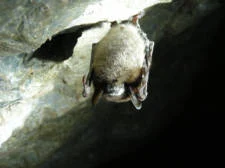
Image: little brown bat affected by white-nose syndrome. Image from the US Fish and Wildlife Service national Digital Library. (Public Domain). Read Nijhuis's "Crisis in the Caves" to learn more about how this fungal disease is decimating bat populations.

And for a more speculative point of view:

• 7 Best-Case Scenarios for the Future of Humanity »

Are you tired of apocalyptic futures where humanity is enslaved by aliens, or we destroy the environment or each other?  George Dvorsky looks at seven science fictional visions of the future that have a happy ending for humanity. Maybe I'm boring, but I were able to choose, I think I'd prefer a future not so different than today ("status quo") but with cleaner air and more green spaces ("bright green Earth") here on Earth, and colonies out in our solar system ("boldly go").  

I'm skeptical of post-human futures that involve uploading our minds to computers or otherwise transcending our physical bodies. Even if that were possible, I suspect that many (or even most) of us would be loathe to leave the real world behind. I personally like having corporeal form, even with all its flaws.

Thursday, October 18, 2012

Science and SF Tidbits: October 18, 2012: Hard SF, Silky Electronics, and Exoplanets

Recent interesting science fiction and bioscience bits:

• Locus Online Perspectives » Stanley Schmidt: Art of Speculation »
How would you define "hard" science fiction? Analog editor and SF author Stanley Schmidt thinks most fans are getting it all wrong. From his interview with Locus:

‘‘ What I mean by ‘hard science fiction’ is actually pretty simple: there’s some element of speculative science or technology in it, which is so integral to the story that you can’t take it out without making the whole story collapse. [...] The second requirement is that there should be some attempt to make the science or technology speculation plausible.”
I agree with him. The focus on engineering and technology often causes stories with solid speculative biology and chemistry to be overlooked as "hard" SF.

• A musical interlude for Battlestar Galactica fans: Sound of Cylons
Hello Gaius my old friend ....


• Excellent Idea of the Day: Sci-Fi in Class : Discovery News »
Do you think high school level science textbooks should include science fiction references or examples? A recent study suggests that science fiction can stimulate students' interest in science.
Join the discussion on Google+.

• Jumping DNA rides aboard a virus, which targets a giant virus, which infects an amoeba, which infected a woman’s eye | Not Exactly Rocket Science | Discover Magazine »
Examination of the microbes in an infected eye turned up a zoo:
"It was carrying two species of bacteria, and a giant virus that no one had seen before—they called it Lentille virus. Inside that, they found a virophage—an virus that can only reproduce in cells infected by other viruses—which they called Sputnik 2. And in both Lentille virus and Sputnik 2, they found even smaller genetic parasites – tiny chunks of DNA that can hop around the genomes of the virus, and stow away inside the virophage. They called these transpovirons."
• ALPHA CENTAURI HAS A PLANET! | Bad Astronomy | Discover Magazine »
Exciting discovery: The Alpha Centauri star system has at least one Earth-sized planet! As the nearest star system to our own, it's a frequent destination for SF space travelers, from Lost in Space to Avatar.  The bad news: it's so close to it's star, it's definitely not another Earth:
"... the planet is baking hot, far too hot to sustain any kind of life as we know it, or even liquid water."
• Spider Silk Could Weave Biodegradable Computer Chips | Wired Science | Wired.com »
Materials science turns to nature: Spider silk is very thin, stronger than steel, extremely flexible and can transmit light almost as well as glass fiber optic cables. Even better, the human body doesn't have a problem with implanted fibers and the components are biodegradable.  That means that there is the potential to use silk produced by spiders or silkworms to develop implantable biomonitoring devices that do not need to be surgically removed. And perhaps far in the future there will be electronic devices that can be composed, rather than producing toxic waste.

Top Image: Artist’s impression of the planet around Alpha Centauri B. Credit: ESO/L. Calçada/Nick Risinger (skysurvey.orgReleased by ESO under the Creative Commons Attribution 3.0 Unported license. More artist's images and diagrams can be found at ESO.gov.

Wednesday, October 17, 2012

Dance your PhD: Viruses in Space and Muscle Demons

I'm a big fan of work at the intersection of science and art, so I quite enjoy watching the entries in the annual "Dance Your PhD" contest. Anyone who has completed a PhD in a science-related field can submit a dance video, with the only requirements being that the PhD has to participate in the dance and the video needs to convey something essential about the research.

This year's overall winner is from the chemistry category. Titled "A super-alloy is born: The romantic revolution of Lightness and Strength", University of Australia materials science PhD student Peter Liddicoat's entry includes several interludes, with a big dance number, alongside juggling, and a bit of clowning.

A couple of this year's biology entries seemed to have a speculative fictional flare that I think deserves a closer look.

The first video that caught my eye was the winner of the Biology category: "The Fable of the Agonist, the Antagonist, the Force and the Demon". Physiology PhD student Maria Vinti turned her thesis research into a surreal dance. Patients affected by stroke sometimes have difficulty moving their limbs because they cannot control the agonist and antagonist muscle groups. Injection of botulinum toxin (a powerful neurotoxin also known as "Botox") into overactive muscles can help ease this condition. Here's the science in dance form:


The Fable of the Agonist, the Antagonist, the Force and the Demon from Maria VINTI on Vimeo.

The second University of Texas graduate student Alaina Brinley's video is the only one to include a rocket and dancing astronauts. She turned her dissertation on "Epstein-Barr virus Reactivation During Spaceflight" into a ballet. Her research seems a bit worrying: 90% of the population carries the Epstein-Barr virus (EBV), which can cause mononucleosis and is associated with some cancers. Spaceflight seems to "wake up" the virus, and cells infected with EBV don't die, even when they are seriously damaged, potentially making cancer serious health risk for astronauts on long-duration space missions.
Watch the dance version of her research:

Brinley:Dance your Dissertation from Alaina Brinley on Vimeo.

It's fun to watch these scientists share their passion for their research through dance. And if some of us viewers learn something new in the process, that's even better!

Sunday, December 12, 2010

Joseph Kulper: Brain viruses and strange equations to save the human race

Today I received a mysterious message:
My name is Joseph Kulper, I work as a geneticist at Celtran
Corporation, one of the world's leaders in bioengineering, and I'm
sending this message to you because I have discovered something very
important, something that has the potential to change everything we
know about human life. I'm not asking for anything from you, I don't
want you to reply or click anywhere, alI I'm asking of you is that you
watch the video I have posted on youtube. Search under my name 'joseph
kulper' and you will find it. It's for you that I'm posting this
video, for all of us, so please take just a moment to watch it.

It wasn't sent to me personally and has the appearance of hapless self-promotion or odd spam.

But I was curious, and I turned up "Kulper's" video, where he invites the viewer to "become part of something greater than yourself. You see the destructive effects of climate change are inevitable, and some sort of drastic action is required to save the human race. So what has Kulper done? Created the Elysium virus, designed to "speed up evolution" so that only the smartest will survive. Watch:


So what is this? This looks like a teaser promotional video, likely for Neill Blomkamp's new movie-in-progress, Elysium.

There are a bunch of images that flash for a fraction of a second during the video which presumably have clues in them. In particular, there are a series of equations at about 4:27. I don't recognize the equations, and they could just be a red herring. Take a look - any guesses?


I couldn't find out much about the movie itself, other than Sharlto Copley - who starred in Blomkamp's District 9 - is part of the cast, and that Matt Damon may join up as well.

Despite the buzz, there hasn't been much information regarding what the plot will actually be about. Another teaser video released in November shows mutant livestock:


So the movie involves global catastrophes and genetic engineering and a selective virus passed from mind to mind; it's apparently set in a dystopian near-future in which biotechnology has run amok.  So maybe it's an action-packed version of Oryx and Crake?

It could be interesting. I just hope there aren't any zombies.

Friday, December 03, 2010

Medical aid on distant worlds


The colony sat at the edge of a river, under an evening sky of breathable air set with three brilliant, fast-moving moons. Beds of glorious flowers dotted the settlement, somewhere in size between a large town and a small city. The buildings of foamcast embedded with glittering native stone were graceful, well-proportioned rooms set around open atria. Minimal furniture, as graceful as the buildings; even the machines blended unobtrusively into the lovely landscape. The colonists had taste and restraint and a sense of beauty. They were all dead.

~ "Ej-Es" by Nancy Kress
The November issue of Lightspeed Magazine republishes Nancy Kress's 2003 short story "Ej-Es". The tale follows a member of a team of "medicians" that lands on a colony planet where the inhabitants have been wiped out by an unknown disease.

In an interview with Lightspeed, Kress explains the inspiration for the medical team:
The Corps is based on USAMRIID, the United States Army Medical Research Institute for Infectious Diseases. This group has joined (and sometimes waged turf wars with) the CDC in fighting epidemics in third-world countries; they also have shared jurisdiction, with FEMA and the CDC, for any bioterrorist attacks here (potential turf wars).
Of course USAMRIID's web site makes it sound like they are quite chummy with the CDC. It's true, though, that the vaccines, antivirals and antitoxins developed by USAMRIID have been used to help people around the world.

I like the idea that when humanity does spread through space, there will be a medical organization equipped to help identify and fight the unexpected diseases we are likely to encounter.  I think it unlikely that viruses or microbes evolved on alien worlds to infect the local life forms would find humans to be good hosts, but who knows? That's why we'd need medical experts ready for the unexpected.

The other scientific aspect of "Ej-Es" is that the infections seem to have induced conversations with invisible companions.  In an accompanying article, neuroscientist The Evil Monkey takes a look at the science of how a brain malfunctions and seizures could lead to visions. He writes:
How is it possible for a sane, sober, rational human to see things that aren’t there, and that maybe don’t even exist? Because your mind is your reality, that’s how. And your mind only exists because your brain exists. And your reality only reflects REALITYTM inasmuch as the information your brain processes accurately represents the world. Which, of course, then begs the question: what happens to us sane, sober, rational humans when our brains misfire?
Read the article to learn how our brain affects our perception of the outside world.

Read "Ej-Es" by Nancy Kress

Thursday, December 02, 2010

One creature's poison is another one's meat

Today NASA held a press conference announcing the first demonstration that organisms could use arsenic in place of phosphorus in their cells. Not surprisingly, science fiction got there first . . .

Kirk told [Bones] about the tabekh sauce. Bones nodded at that and said, "Yes, I've heard of it. I don't think you'd want to try it, though."
"Why not?"
"One of the other ingredients is arsenic."
Kirk blinked.
"Apparently they like the bitter taste," Bones said. "Also, the arsenides are pretty important in their diet. Klingons can get into horrible arsenide deficiencies if they're not careful, especially in stressful situations –"
~ Doctor's Orders by Diane Duane (1990)

While Klingons need a bit of arsenic in their diet, the element is a deadly poison to humans and most other Earthly life forms. A big part of what makes arsenic toxic is that it has very similar - but not identical - chemical properties as phosphorus, one of the fundamental building blocks of life.

Phosphorus is a component of the phospholipid molecules that form cellular membranes, the backbone of DNA and, importantly adenosine triphosphate (ATP).  ATP is a molecule our cells use to store and transport energy. When arsenic is present in cells it interferes with the formation of ATP, which eventually leads to cell death.   For for a visual demonstration of how arsenic can substitute for phosphorus in biomolecules, see the video at the bottom of this page

GFAJ-1 bacteria grown on arsenic.
 Because  of the similarities between the properties of arsenic and phosphorus it's natural to speculate that organisms could evolve so that they could use arsenic in place of phosphorus.  Dr. Felisa Wolfe-Simon, a geobiologist with the US Geological Survey had been testing that idea by studying bacteria living  in California's Mono Lake, which has naturally high arsenic levels.

Wolfe-Simon's work is funded by the NASA Astrobiology Institute, and back in March she explained why finding arsenic-based life would be an important step in possibly understanding alien life.
Dr Wolfe-Simon has theorised that there may be life that chose an “evolutionary pathway” to utilise arsenic. If such microbes existed, it could suggest that life started on our planet not once but at least twice. In turn this would help to support the idea that life is much more likely to have started elsewhere in the galaxy.
It's a pretty interesting speculation about alternative biochemistry,  and I don't think it's too surprising to find the idea has already been played with in science fiction. 

The best example I can think of is science fiction author and microbiologist Joan Slonczewski's novel Brain Plague (Amazon.com affiliate link). The story is about sentient arsenic-dependent microorganisms called "micros" that live in colonies in human hosts.
"Oh Great One" the letters flashed green. "Our growing children need arsenic."
"Arsenic" Chrys looked up. "Isn't that what the slaves kill for?" On the street they called it "ace."
Doctor Sartorius extended an appendage. A claw snapped open, revealing a white pill. "Micros evolved on a plenet full of arsenic. They need it as an essential mineral."
"But ace is poison"

"It's a controlled substance," the doctor admitted. "But our dietary supplement traps the arsenic in special cagelike molecules that keep it out of your own cells. Only the micros can extract it."

~ Brain Plague by Joan Slonczewski (2000)
Slonczewski acknowledges fellow microbiologist Barry Rosen, who studies arsenic resistance in microbes, for "telling her about arsenic."

But until today, the idea was still speculation.  NASA held a press conference today to announce - after much wild speculation and hoopla - Wolfe-Simon's experiments had shown that the bacteria from Mono Lake could indeed use arsenic in place of phosphorus.

Wolfe-Simon and her team of researchers took samples of lake sediment containing bacteria (named GFAJ-1). The bacteria were placed in a medium in which all phosphorus has been removed, but arsenic was present - and they grew.  If arsenic was also removed from the medium, the bacteria stopped growing, so either phosphorus or arsenic are necessary. Their experiments further show that when phosphorus is not present, arsenic is incorporated into DNA, cellular membranes, proteins and other molecules where phosphorus is normally found.

It is important to note that the bacteria grow much better when phosphorus is present, which means that they aren't truly "arsenic based life". But the fact that the bacteria don't need phosphorus is a major finding that challenges the common wisdom as to what constitutes the necessary components for life. While carbon, oxygen, sulfur and nitrogen are still commonly required by all the living organisms that have been studied, now we know that an environment - on Earth or any other planet - without phosphorus may indeed support life if there is arsenic to take its place.

As Wolfe-Simon puts it:
"If something here on Earth can do something so unexpected, what else can life do that we haven't seen yet?"
Indeed!

For more about the science, check out posts by Athena Andreadis, Ed Yong, Sarah Goslee, PZ Myers, and Jef Akst.


Here is an overview of the study from Science magazine:


Edited to add: Carl Zimmer has an article in Slate about the technical criticisms that have appeared regarding the science in this paper: "Scientists see fatal flaws in the NASA study of arsenic-based life."

In particular, he points to University of British Columbia microbiologist Rosie Redfield's  scathing review of the article.  
Also see the responses by George Cody and Alex Bradley.

Technical Background:

Research of Felisa Wolfe-Simon

Wolfe-Simon F, et al. "Did nature also choose arsenic?" International Journal of Astrobiology 8(2):69-74 (2009) (pdf)

Wolfe-Simon F., et al "A Bacterium That Can Grow by Using Arsenic Instead of Phosphorus" Science Express (2010) DOI: 10.1126/science.1197258 (abstract only without subscription).

NASA scientists have discovered a new extreme-loving microorganism in California's exotic Mono Lake  (2003) - note that this is a different organism, Spirochaeta americana. Mono Lake is full of weirdness!

Wednesday, September 01, 2010

Temperate Bacteriophages and the Abyormenites

Science fiction author Hal Clement (1922-2003) was known for creating aliens that are well-adapted to the often extreme physical conditions on their home planets. Clement is probably best known for his 1954 novel Mission of Gravity, which takes place on a planet with a surface gravity hundreds of times greater that of Earth. But that's not the only unique world he imagined.

Clement's novel Cycle of Fire is set on the planet Abyormen, which orbits a dwarf star, which in turn circles a blue giant. The planet's usual orbit creates two sixty-five-year-long seasons; the "hot season" and the "cold season". Each season is dominated by a different intelligent species. 

Abyormen's life forms have evolved a unique form of reproduction to account for the widely varying in environmental conditions. All its creatures - including the intelligent ones - lay spores in their alternate season counterparts. Those spores lie dormant until the seasons begin to change.

When the cold season on Abyormen draws to a close, the "cold" Abyormenites die and the "hot" Abyormenites emerge from the spores left in their bodies decades before. Those newly hatched "hot" Abyormenites carry spores for the next generation of "cold" Abyormenites, which in turn lie dormant until the next change of the seasons. Thus each sapient species on the planet absolutely depends on the life and ultimate death of the other for their own survival.
  As Donald Hassler writes in his Clement reader's guide, the inspiration for the Abyormenites came from an article about the viruses that infect bacteria:
Clement has said that Andre Lwoff's article entitled "The Life Cycle of a Virus," which appeared in the March 1954 Scientific American, gave him the idea for Cycle of Fire. Not only is the content of Lwoff's piece referred to in chapter fourteen of the novel but also the poetic tone of this scientific article underlies the novel. Lwoff describes the way certain viruses are capable of remaining dormant inside the totally alien life form of certain bacteria for several generations before they reappear as distinct virus life, and he emphasizes the cycles of life and death coupled here with reproduction and the protection of generation. Although much of Clement's fiction avoids such sublime and poetic images, Cycle of Fire is meant to demonstrate, on this most elemental level of life and death (not microscopic in the novel, of course), the symbiotic inter-dependence of what seem to be very alien life forms.
AndrĂ© Lwoff received the Nobel Prize in Physiology or Medicine in 1965 for his research on viruses  - called "bacteriophages" - that infect bacteria.  Bacteriophages have two different modes of reproduction. In some cases the bacterial cells are broken open ("lysed") after the viruses reproduce, in what is known as the lytic cycle.

But not all bacteriophages destroy their hosts. As Lwoff explained in his Nobel Prize lecture:
As far as we know, the bacteriophage itself controls its own regulation. The bacterium infected by a virulent bacteriophage has become a virus factory which cannot be stopped except by its own disintegration. A bacterium has no control over the development of a virulent bacteriophage. But this is an extreme case. The relations between virus and bacterium do not always have this dramatic character.

As a matter of fact bacteriophages exist which do not kill all the bacteria which they infect. Some infected bacteria survive and perpetuate the ability to produce bacteriophages. These are lysogenic bacteria. Their investigation has profoundly modified our ideas on the relations between cell and virus.

The DNA of the so-called "temperate" bacterophages that follow the lysogenic life cycle  is integrated into the bacterial genome. The viruses remain dormant until the environment in the bacterial cell is favors lytic reproduction. It's easy to see how Clement drew on the life cycle of these microbes in imagining the life cycle of the Abyormenites.

While this story might just be considered merely an interesting writing anecdote, I think it illustrates an important element of science fiction. Clement read an article about cutting edge science, but didn't just incorporate the scientific observations directly into his story. Instead he built on the science to create something very different from the original inspiration. I think that's one of the factors that distinguishes science fiction from fiction with science. And that's one of the reasons why I enjoy reading SF.

References:

Lwoff, Andre. "The Life Cycle of a Virus" Scientific American 190, 34-37 (1954) doi:10.1038/scientificamerican0354-34 [requires a site license to access)]

Lwoff, Andre. "Lysogeny" Bacteriol Rev. 17(4): 269-337 (1953) [free access]

Hal Clement (Starmont Reader's Guide) by Donald M. Hassler @ Amazon.com (affiliate link)

Cycle of Fire by Hal Clement @ Amazon.com (you can get a "new" copy for only $102! affiliate link)

Saturday, October 31, 2009

The Unselfish Gene: Altruism and Zombies

The Unselfish Gene is the first published novel of science journalist Robert D. Burns, and it sounds like a lively mixture of pulpy science fiction-horror and genetics. The novel's blurb gives you a taste of that:
It's love and terrorism in the time of cholera. In the mid-21st century, a form of bird flu has killed billions and turned most of the rest into mindless, stumbling zombie-like invalids. The few humans who had immunity now face the threat of a comet on a collision course with Earth. Settlers from the Moon colony were spared the disease, but face their own threats to survival: radiation-induced mental illness, a limited gene pool and shrinking resources. The Moon settlers have launched a last-ditch mission to Earth to salvage human DNA and other crucial materials ... before the comet strikes. The salvage crew find the biggest threat to the mission is neither the zombies or the comet, but insanity within their own ranks.
Now if you are a biology geek like me, the first thing you think of when you hear the novel's title is Richard Dawkin's classic book on evolution The Selfish Gene. It turns out that that was indeed one of Burns's inspirations for the novel, as he told Irma Arkus in an interview on Hi-Sci-Fri (The interview begins at 22:17). They also discuss the evolution of altruism, the deleterious effects of radiation, and other sciency bits from the novel.

Read excerpts from The Unselfish Gene, and take a peek at the novel's illustrations.

Purchase The Unselfish Gene @ Amazon.com (affiliate link)

Bioscience books discussed on the Hi-Sci-Fi podcast:


David Sloan Wilson's Unto Others: The Evolution and Psychology of Unselfish Behavior.


Richard Dawkins' The Selfish Gene


Tags:, ,

Wednesday, July 22, 2009

Serialized Fiction: The Vector

It’s the age of the home-made virus, and humanity is dying. It just doesn’t know it yet.

In Prague, a young woman named Eva returns home to escape the plagues, only to find her mother missing and the police blaming her for the worst outbreaks in recent memory. Events are complicated by the appearance of a Healer — a merciless Chinese agent — sent to neutralize a new strain that may bring Prague to its knees.

With only days until the launch of a super-virus, Eva must navigate a hostile city and escape to safety before she becomes another faceless victim in this global, slow apocalypse.
If you like dark end-of-the-world-due-to-genetic tampering stories you should check out MCM's serialized novel The Vector. There will be a new chapter every Monday and Wednesday through the end of December - or you can buy the complete story today for $5.

Read the beginning of The Vector.

(via io9)

Tags:, ,

Tuesday, July 07, 2009

Summer and Science Fiction

Wow, the summer is really flying by. I've been having a very nice bit of a holiday, topped by an excellent 4th of July BBQ: good friends, tasty food, cold beer and sitting by the pool discussing time travel paradoxes. I could do that every day, but alas, that's not possible. But what I can do is spend some of the cool evening hours reading stories by some new (or new to me) SF authors, and when I find stories available online I can share them with you.

To start, here's a short tale by Australian SF writer Ian McHugh featuring whales and prions and aliens:
The biology is fanciful - it's not known whether whales are susceptible to prion diseases, and the singing whale theme has a whiff of Star Trek IV about it, but it's got a unique twist.

And music has indeed been made based on the three-dimensional structure of biological molecules. Listen to human growth hormone. It's not much like humpback whale song, but it's nice.

Image: Human prion protein PDB structure 1i4m (Knaus KJ et al. " Crystal structure of the human prion protein reveals a mechanism for oligomerization." Nat Struct Biol 8:770-774) (2001)
Tags:,

Thursday, April 02, 2009

Crossroads: Free Korean SF Stories in English

Crossroads is a science web site launched in 2005 by the Asia Pacific Center for Theoretical Physics with the theme "vision for Science, Future, and Humanity". It includes essays and articles in Korean and English about science and culture, as wells as a number of science fiction short stories. I'm not sure how the English translations were created, but I suspect that they don't do the original stories justice.

Here are a few with biological themes:
(via Gord Sellar and the World SF News Blog)
Tags:, ,

Friday, December 19, 2008

Greg Egan Idea Man

At Tor.com Jon Evans speculates on why Australian science fiction writer and computer programmer Greg Egan isn't a superstar. He says:
If you haven’t read any Egan, you so should. He takes the wildest frontiers of today’s science and turns them into truly brainbending speculative fiction that continually challenges the reader’s ideas of both reality and humanity. He’s also a terrific sentence-by-sentence writer.
Egan writes hard science fiction that is frequently based on mathematics, physics and computer science. For example, his short story "Wang's Carpets" involves the discovery of truly alien aliens that are living embodiments of Wang tiles.

Evans speculates that one reason Egan's writing doesn't enjoy more popularity is because his stories are actually too focused on complicated scientific ideas. It's hard to know how much of a role that has played in his writing career, but I do know it affected my interest in his novels. I've read a few of his short stories, including "Wang's Carpets" and "Border Guards", and enjoyed them, but I don't have a particular interest in quantum physics or mathematics, and his novels just didn't sound that appealing to me - at least not appealing enough to seek them out.

Now maybe I've been wrong - I really enjoyed Robert Charles Wilson's Spin, which seems to have some superficial similarities to Egan's Quarentine - and I'll probably give Egan's work a chance next time I run across it. But that points to another problem Evans points out: Egan's novels can be hard to find in bookstores and libraries. For example, the nearest library copy of his latest novel, Incandescance, is 60 miles away in the next county over. It's obviously not something I'd find by browsing the shelves.

It's nice, then, that a number of Egan's short works are available online. I've been downloading some of them for future reading, and discovered is that some of his stories are based on bioscience too. I haven't read them all so I don't really have anything to say about the actual science in them. All I can suggest is that you read them for yourselves. Here are a few links for your weekend reading pleasure:
And it's not biological at all, but definitely read "Border Guards". It both has weird science and a very touching ending.

Tags:,

Tuesday, December 16, 2008

2008 Holiday Gift Guide: Bioscience Fact

Even if the people you are buying gifts for aren't interested in SF, they might enjoy a popular science book. I've rounded up a selection of books that take a look at different aspects of the biosciences that were published this year. Note that the descriptions were swiped from Amazon.com, since I haven't read most of these books myself. All Amazon.com links are affiliate links.


Human: The Science Behind What Makes Us Unique by Michael S. Gazzaniga

Neuroscientist Gazzaniga is "adept at aiding even the scientifically unsophisticated to grasp his arguments about what separates humans from other animals. His main premise is that human brains are not only proportionately larger than those of other primates but have a number of distinct structures, which he explores along with evolutionary explanations for their existence."
Microcosm: E. coli and the New Science of Life by Carl Zimmer

Science writer Zimmer "guides us on a memorable journey into the invisible but amazing world within and around a tiny bacterium. He reveals a life-or-death battle every bit as dramatic as that on the Serengeti and one that offers profound insights into how life is made and evolves."
The Superorganism: The Beauty, Elegance, and Strangeness of Insect Societies by Bert Hölldobler and Edward O. Wilson

"The Pulitzer Prize-winning authors of The Ants render the extraordinary lives of the social insects in this visually spectacular volume. [...] Coming eighteen years after the publication of The Ants, this new volume expands our knowledge of the social insects (among them, ants, bees, wasps, and termites) and is based on remarkable research conducted mostly within the last two decades."

Cloning: A Beginner's Guide by Aaron D. Levine

This is a well-reviewed introductory guide to the science and ethics of cloning.


Your Inner Fish: A Journey into the 3.5-Billion-Year History of the Human Body by Neil Shubin.

"Fish paleontologist Shubin illuminates the subject of evolution with humor and clarity in this compelling look at how the human body evolved into its present state."
Bonk: The Curious Coupling of Science and Sex by Mary Roach

Roach offers a witty look at the science of sex. I think it would make a nice gift bundled with Laura Woodmansee's Sex in Space.
The Science of Heroes: The Real-Life Possibilities Behind the Hit TV Show by Yvonne Carts-Powell

Carts-Powell uses the TV show Heroes as a jumping off point for discussing biology and physics. I actually have a copy of this which I'll post a review for soon.
Beyond Human: Living with Robots and Cyborgs by Gregory Benford and Elisabeth Malatre

"The simple title of this book belies its profundity-and its sense of humor. Besides an up-to-date, comprehensive overview of developments in the fields of robotics and artificial intelligence, physicist Benford and biologist Malartre also address deeper questions about the relationship between the brain and the mind, as well as humankind's nervous relationship with increasingly sophisticated machines"

As I mentioned in my previous post, there are many more similar books listed at the Biology in Science Fiction bookstore.

Tags:,

2008 Holiday Gift Guide: Science Fiction Novels With A Bit of Biology

Tis the season and all that, so if you haven't finished your holiday gift shopping I thought I'd make a few suggestions.

I don't think it should surprise any of you that books are at the top of my list, both for giving and receiving. Here are a few recent science fiction novels with a bit of biology that I blogged about this year (note: all Amazon.com links are affiliate links):


Infected: A Novel by Scott Sigler (read the original post). Sigler's follow-up novel, Contagious, will be released in hardcover on December 30th.
Unwelcome Bodies ,a short story collection by Jennifer Pelland (read the original post).
Dr. Franklin's Island, a young adult novel by Ann Halam (read the original post).
Ratha's Courage is another young adult novel (read the original post). It's the long-awaited fifth book in Clare Bell's "The Named" series.
Dogs by Nancy Kress is (read the original post) is a biological warfare thriller.
Seeds of Change is an anthology featuring short stories by Tobias Buckell, Ken MacLeod, Nnedi Okorafor-Mbachu, KD Wentworth, Jeremiah Tolbert, Jay Lake, Ted Kosmatka, Blake Charlton, Mark Budz and John Joseph Adams. (Read the original post)
Neuropath by R. Scott Bakker and Blindsight by Peter Watts may represent a new SF movement: neuropunk. (Read the original post)

Riders of the Storm is the latest novel set in Julie Czerneda's Clan Chronicles universe. (read the original post)
Paul McAuley's The Quiet War features engineering of both people and ecosystems.(Read the original post)
Invertebrata Enigmatica: Giant Spiders, Dangerous Insects, and Other Strange Invertebrates in Classic Science Fiction and Fantasy, edited by Chad Arment is a collection of SF short stories "involving strange invertebrates". I haven't read it - or blogged about it - but it sounds like fun.

And if none of those sound interesting, you might check out the Biology in Science Fiction bookstore, assembled by yours truly.

There are 2 days left to order from Amazon.com with free shipping and still have the package delivered by Christmas - three days if you are ordering from Amazon.co.uk - so you can even shop from the comfort of your own home. All Amazon.com links are affiliate links.
Note: Links to Amazon.com are affiliate links. As an Amazon Associate I earn from qualifying purchases.