Showing posts with label future predictions. Show all posts

Thursday, November 15, 2012

Science & SF Tidbits: Best science journalism and rosy futures

Recent reading:

AAAS - Winners Named in Science Journalism Awards »

The American Association for the Advancement of Science announced the winners of the 2012 AAAS Kavli Science Journalism Award Competition. The winners include:

Carl Zimmer, for publication in a "Large Newspaper" (New York Times)
Michelle Nijhuis, for publication in a magazine (Smithsonian)
 Sarah Holt and Laurie Donnelly for "In Depth Reporting" on TV (WGBH/NOVA)
See the announcement for the full list of winners and some back story about how their stories were written.

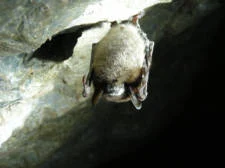
Image: little brown bat affected by white-nose syndrome. Image from the US Fish and Wildlife Service national Digital Library. (Public Domain). Read Nijhuis's "Crisis in the Caves" to learn more about how this fungal disease is decimating bat populations.

And for a more speculative point of view:

• 7 Best-Case Scenarios for the Future of Humanity »

Are you tired of apocalyptic futures where humanity is enslaved by aliens, or we destroy the environment or each other?  George Dvorsky looks at seven science fictional visions of the future that have a happy ending for humanity. Maybe I'm boring, but I were able to choose, I think I'd prefer a future not so different than today ("status quo") but with cleaner air and more green spaces ("bright green Earth") here on Earth, and colonies out in our solar system ("boldly go").  

I'm skeptical of post-human futures that involve uploading our minds to computers or otherwise transcending our physical bodies. Even if that were possible, I suspect that many (or even most) of us would be loathe to leave the real world behind. I personally like having corporeal form, even with all its flaws.

Friday, October 05, 2012

Free Friday Flick: Things to Come - science conquers all

This week's recommended science fiction movie is the British 1936 spectacular Things to Come. The story is adapted from HG Wells' novel The Shape of Things to Come. 70-year-old Wells wrote the screenplay himself, incorporating some ideas from his non-fiction book The Work, Wealth and Happiness of Mankind, an overview of global economics and sociology.

The movie follows the residents of Everytown over the course of a century as the population is first decimated by biological weapons in a devastating decades-long global war and then rebuilt into a shining future city by technocrats. It depicts a triumph of science and engineering that that brings order and prosperity, and even opens mankind's way into space.


The movie was was produced by Alexander Korda and directed by William Cameron Menzes, and stars Raymond MasseyRalph Richardson, and Margaretta Scott.

It apparently was not widely popular at the time it was released, perhaps because the public was all too aware that real war in Europe was looming on the horizon. The filmmakers were certainly aware of that possibility. Ralph Richardson's depiction of the thug-like Boss was based on the dictator Benito Mussolini, causing Things to Come to be banned in Italy.

While the acting is rather stiff at times, the film is worth watching if only for the still-stunning visual design. It's a science fiction classic.

Well's original novel is also worth reading. As a future history it includes a fair amount of 1930s racism and sexism, and the envisioned world state where individualism has been "overcome" seems nightmarish. But I do find it interesting that Wells imagined a future where crude biological engineering eventually becomes common-place. As he describes it:
In 2047 Homer Lee Pabst published his remarkable researches on the effect upon chromosomes of certain gases derived from the old Sterilizing Inhalation made from Permanent Death Gas. These gases are known now as Pabst's Kinetogens, and there is a whole series of them. Their general effect is to produce mutations of various types. They bring about, abundantly and controllably, a variability in life which has hitherto been caused only with comparative rarity by cosmic radiations. By 2050 the biological world was confronted by a score of absolutely new species of plants and--queer first-fruits in the animal world--by two new and very destructive species of rodent. The artificial evolution of new creatures had come within the range of human possibility.
Not only are new species created in this future society, but extinct species are restored. 

In this instance, Wells thought too small. The revolution in genetic engineering arrived 75 years before he predicted, and techniques we use today allow genes to be modified both specifically and subtilely, as compared to the crude introduction of mutations using radiation and mutagenic chemicals that was still fairly new science in the 1930s. 

Perhaps Wells was familiar with the work of Herman Muller (published in 1927), demonstrating X-rays could be used to introduce mutations in fruit flies. But his description of "Pabst's Kinetogens" sounds more like the research of Charlotte Auerbach, who discovered the mutagenic properties of mustard gas. Her work was not published until the 1940s, so perhaps Wells was prescient about the direction of biological research, even if he was a century off in his prediction.

You can watch Things to Come for free on YouTube.

You can also purchase a copy of the colorized version of Things to Come or a copy of the original novel The Shape of Things to Come at Amazon.com (affiliate link).

Tuesday, July 28, 2009

Summer Vaction-Style Random Thoughts

So my brother is currently in town on his annual post-Comic-Con visit (we're going to Disneyland, yay!), so my posting will be even lighter than usual this week.

I've been reading some old SF novels over the past few weeks, and here are some of my random thoughts (spoilers, although I'm not sure the warning is necessary for novels over 20 years old):

Stranger in a Strange Land would have been much much shorter if in Heinlein's future America effective birth control had been invented before a manned expedition was sent to Mars. Also, if Michael Valentine Smith had been raised by wizards instead of Martians you could place it squarely into the Fantasy genre without having to otherwise change the plot (sufficiently advanced technology looks like magic etc. etc. ).

• I think it's a bummer that Asimov decided to tie together his series of Foundation novels and Robot stories by making the humanity's expansion onto many worlds, the creation of the Galactic Empire and its replacement by the Foundation ultimately due to the meddling of a couple of mind-reading, mind-influencing robots. I'd like to think that we'll conquer the universe without the nudging of telepathic robot nannies. Maybe I just wasn't in the mood for more magic-with-a-thin-veneer-of-science after reading SiaSL.

(Also, I wonder about the Foundation movie in development - how will they successfully adapt the original trilogy which covers a lot of time and has a lot more talking than action? Also, why not film the robot novels, which have movie-friendly Earthman/robot sidekick solve-a-mystery plots?)

• I've also just read Marge Piercy's Woman on the Edge of Time. I'm putting together a post on it, since advanced biotechnology plays an important role, but I wanted to mention that there is going to be a discussion about it starting tomorrow on sajbrfem's journal as part of a "Women in Science Fiction" reading club.

• Every so often an article like this comes up on my newsreader:
". . . it’s what technology ethicist Paul Root Wolpe, director of the Center for Ethics at Emory University says during the piece that, for me, delivers an equally big (if not bigger) impact:

“It’s what I always tell my students that there is no science fiction anymore. All the science fiction I read in high school, we’re doing.“
And I wonder to myself what sort of mundane SF Wolpe read in high school. Do we have regular space travel or colonies off of the Earth? Nope. Have we found life on other planets (never mind sentient life)? Nope. What about human genetic engineering or cloning? We're approaching that ability, but it's still highly experimental. Can we upload our minds into a computer? Not yet. Time travel? Uh uh. Telepathic robots? Not even. Most of that fun stuff isn't going to happen in the near future if at all. We are living in the future, sure, but it's not the one of most science fiction novels.

• Also I've updated my posts about the Darwinism panel at Readercon and the science in SF-related panels at Comic-Con with attendee reports.

Anyway, that should hold you 'til I'm back.

Tags:,

Thursday, November 13, 2008

The Future of Sci-Fi

This week's issue of New Scientist has a special focus on science fiction. They asked a number of science fiction authors what the future holds for science fiction.

I thought Stephen Baxter made an excellent point about the changing nature of science fiction as science has progressed over the past century:
But science fiction has - rarely - been about the prediction of a definite future, more about the anxieties and dreams of the present in which it is written. In H. G. Wells's day the great shock of evolutionary theory was working its way through society, so Wells's 1895 classic The Time Machine is not really a prediction of the year 802,701 AD but an anguished meditation on the implications of Darwinism for humanity. As science has moved on, a whole variety of science-fictional "futures" has been generated
He notes that today's science fiction is influenced by advances in biotechnology and information technology which have created the possibility of transhumanism, and the looming issue of climate change.

Kim Stanley Robinson similarly points out that science fiction "spring(s) from the realities of the time", but notes that "rapid technological change, volatile global politics and inevitable climate change all combine with contingency to make imagining our real future impossible."

I think that's what makes science fiction interesting to me - there are so many possible futures out there to be explored.

Also see comments by Ursula Le Guin, William Gibson, Margaret Atwood, and Nick Sagan.

Tags:,

Thursday, July 24, 2008

Freeman Dyson on Do-It-Yourself Biotech and Extraterrestrial Life

Physicist Freeman Dyson gave a TED talk where he suggests that in the future there will be do-it-yourself biotechnology kits for the home geneticist, and that this is a necessary for the future acceptance of biotech by the general population.
“We should follow the model that has been so successful with the electronic industry.” Dyson said. “What really turned computers into a great success in the world as a whole was toys. As soon as computers became toys, when the kids could come home and play with them, then the industry took off. That has to happen with biotech.”
He does acknowledge that he doesn't really know that much about biotechnology, and so it's understandable that he misses an important point: biotech "toys" involve the manipulation of living and (often) breathing life forms. Accidentally creating an genetically engineered dog that is in constant pain is fundamentally different than mis-soldering a capacitor to a motherboard. And the release of genetically engineered animals, plants and microbes has the potential to cause significant environmental damage. Messing with biology just isn't the same as toying with electronics.

The rest of Dyson's talk mostly focuses about the search for extraterrestrial life on Europa by shining a bright light on the surface, which is kind of a nifty if unlikely to be successful idea. "Look for what is detectable, not for what is probable" is his philosophy.
Hopefully, if we do end up finding life on Europa it goes a bit better than Clarke predicted in 2010: Odyssey Two, where humans are ordered to stay away from that moon so as not to disturb the life there.

The last bit of Dyson's talk is about possible life in the Kuiper belt, which - if it exists at all - he believes will be quite widespread. Such life would be adapted to living in the extremely cold vacuum of space. This is not a new idea from him. In a talk he gave in 2000, he not only talked about the possibility that life that already exists among the asteroids, but that Earth life might be adapted to live under those conditions too:
The jump from breathing air to living in a vacuum is no greater than the jump from breathing water to breathing air. Plants and animals will need some genetic engineering to be at home in a vacuum. Plants will need new organs of photosynthesis that produce liquid or solid peroxides instead of oxygen gas. Animals will need new organs of respiration to take in oxygen in the form of peroxides instead of from air. Instead of lungs, animals would have an organ like a liver that dissociates peroxides slowly into molecular oxygen and feeds the oxygen into the blood.
Both plants and animals will need stronger skin to hold internal pressure and prevent their blood from boiling. The vapor pressure of water at blood temperature is quite small, so the skin will not need to be thick to hold it. In cold places far from the sun, animals will need thicker layers of fur and plants will need thicker layers of bark to provide thermal insulation. This will be a challenge for plant and animal breeders, but with a mastery of the techniques of genetic engineering they should be able to do it.
While that sounds fairly far-fetched, perhaps children that grow up playing with bioengineering kits will be able to solve any technical problems for developing life adapted to space.

(Dyson lecture via Tomorrow's Table)
Tags:, ,

Wednesday, June 18, 2008

Le Guin, Carrots and Playboy Magazine

Jemez Falls
"[. . .] We are John Chow. But we are differently trained."
Martin looked shell-shocked. "How old are you?"
"Twenty-three."
"You say he died young – had they taken germ cells from him beforehand or something?"
Gimel took over: "He died at twenty-four in an air car crash. They couldn't save the brain, so they took some intestinal cells and cultured them for cloning. Reproductive cells aren't used for cloning, since they have only half the chromosomes. Intestinal cells happen to be easy to despecialize and reprogram for total growth."
"All chips off the old block," Martin said valiantly. "But how can . . . some of you be women . . .?"
Beth took over: "It's easy to program half the clonal mass back to the female. Just delete the male gene from half the cells and they revert to the basic, that is, the female. It's trickier to go the other way, have to hook in artificial Y chromosomes. So they mostly clone from males, since clones function best bisexually."
Gimel again: "They've worked these matters of technique and function out carefully. The taxpayer wans the best for his money, and of course clones are expensive. With the cell manipulations, and the inucbation in Ngama Placentae, and the maintenance and training of the foster-parent groups, we end up costing about three million apiece."
~ "Nine Lives", by Ursula LeGuin, 1969
Ursula Le Guin's Nebula award-nominated novelette "Nine Lives" is one of her few "hard" science fiction stories. As she wrote in its preface:
It is as near "hard-core" or wiring-diagram science fiction as I ever get; that is, it's a working out of a theme directly extrapolated form contemporary work in one of the quantitative sciences - a what-if story.
What makes the story memorable is that it's not merely extrapolated science; she uses the science as a jumping off point to explore the implications of cloning and how we perceive "self".

The inspiration for "Nine Lives" was a chapter on cloning in Gordon Rattray Taylor's 1968 book The Biological Time Bomb which talked about recent advances in cloning - not humans, of course, but carrots and frogs. The book is an excellent overview of the cutting edge of biotechnology in the late 1960s1: not just cloning, but also human genetic engineering (years before the first genetically-modified bacterium), creating viruses and cells from scratch, artificially boosting intelligence and memory, cryonics, and longevity treatments. Anyone who thinks these ideas are recent (or were new 10 or 20 or 30 years ago), simply wasn't paying attention.

The cloning experiments Taylor describes were conducted by F.C. Steward at Cornell University. He took cells from the carrot root, figured out how to grow the cells in culture (coconut milk was the key ingredient to the culture medium), then was able to show that they could be induced to put out new roots and shoots and flowers and seeds - complete new plants2. While growing cells in culture wasn't novel, being able to develop into different tissues was. In an equally significant line of research, in 1962 Oxford developmental biologist John Gurdon showed that frogs could be cloned by transferring the nucleus from tadpole intestinal cells into an unfertilized egg. From the perspective of 1968, it must have appeared that human cloning was just around the corner. Little did anyone anticipate that it would take more than 30 years before the next cloning breakthrough: production of Dolly the sheep by transferring the nucleus from an adult cell.

While Taylor's description cutting-edge research made it seem as if human might soon be a reality, Le Guin's primary inspiration appears to have been his discussion of the social implications of human cloning:
Members of a clonal group will enjoy an important advantage: like identical twins, they will be able to accept grafts of tissue of whole organs from one another. Apart from the much greater security of life this will give them in general, such an advantage might be supremely important among a small isolated group, such as astronauts on a mission lasting several years, and, at least until such time as the problems of graft rejection are overcome [. . .], it will be an obvious matter of policy to select teams in this way. Indeed there may be another good reason for doing so.

At present the only genetically identical groups with which we are acquainted are twins, triplets and the rare higher orders of identical twindom. There is some evidence that identical (or one-egg) twins have a peculiar sympathetic awareness of each other's needs and problems - even, it has been claimed, a psychic awareness amounting to thought transference. It is certainly true that twins brought up in widely different circumstances have often lived closely similar lives, marrying similar partners of similar ages, and this is so even when they have not been in communication with one another. It is not mere sensationalism, therefor, to ask whether the members of human clones may feel particularly united, and be able to co-operate better, even if they are not in actual supersensory communication with one another.
And there you have the basis for Le Guin's story, which looks at what happens when all but one of such a cloned group of off-Earth explorers is killed in an accident.


So what's the Playboy connection? Back in the 1960s, the magazine actually published a fair amount of high-quality science fiction3, and that was where "Nine Lives" first saw print - under the name "U. K. Le Guin", because apparently a female author would have made its readers "nervous".4 Anyway, for those of you who don't have 40-year-old issues of Playboy in your garage (do people keep back issues the same way they archive National Geographic?), the story has been widely anthologized. If you haven't read it, find yourself a copy, because (as Nancy Kress put it) it's "one of the finest cloning stories written".

1. Biological Time Bomb is a treasure trove of science fiction ideas. Take, for example, the chapter on genetic engineering, which suggests that DNA from an egg could be used to fertilize another egg, bypassing the need for sperm. Taylor's conclusion cries out to be the basis of a story (and maybe it was): "The logical extension of this proposition is the complete elimination of men and the creation of a race of Amazons. While things will hardly go so far on earth, it might be convenient to colonize another planet in this way." I wonder if there is a modern popular science text that would be as useful to a SF writer.

2. For technical details, see Steward FC et al. "Growth and Development of Cultured Plant Cells" Science 143(3601):20-27 (1964). DOI: 10.1126/science.143.3601.20

3. If you stumbled on this post looking for science fiction writer veggie porn, sorry to disappoint.

4. Le Guin has commented: "It's not surprising that
Playboy hadn't had its consciousness raised back then, but it is surprising to me to realize how thoughtlessly I went along with them. It was the first (and is the only) time I met with anything I understood as sexual prejudice, prejudice against me as a woman writer, from any editor or publisher; and it seemed so silly, so grotesque, that I failed to see that it was also important."

Tags:, ,

Tuesday, June 03, 2008

Biology and Science Fiction on Tech Nation

I just came across the Tech Nation/Biotech Nation podcast*, which interviews scientists and authors once a week. Browsing through their archives, I came across a couple of interviews with science fiction writers:

April 8, 2008: Interview with Scott Sigler, author of Infected
Dr. Moira Gunn speaks with Scott Sigler, who talks about his bioterror thriller "Infected." While it's based on the premise of a biological weapon on the loose, he's actually a modern day Charles Dickens.
August 14, 2007: Interview with Richard Morgan, author of Thirteen
Dr. Moira Gunn speaks with Richard Morgan about what life may be like after a hundred years of biotech. Morgan explains we'll have gotten plenty right and plenty wrong.


* thanks to Discovering Biology in a Digital World

Tags:, , ,

Tuesday, January 29, 2008

Life After People

The History Channel has a web site to complement their special, Life After People. It asks a simple question: what would happen if all humans disappeared from the Earth?

You can watch video that explores whether a plague could kill us all, and what would happen to the (non-human) animals, our buildings, and the rest of the Earth, if it did. There's even a Survival Guide that should come in handy if you are the lone survivor. Even better, print it out now, in case the power fails . . .

Image: the documentary shows that Stephen Colbert's worst fears may come true.
Tags:,

Friday, August 10, 2007

TransVision 2007

In the last week of July the TransVision 2007 conference was held in Chicago. The theme was "Transhumanity Saving Humanity" and the speaker list included longevity scientist Aubrey deGrey, futurist Raymond Kurzweil, a number of scientists and even William Shatner. The list of topics was broad too:
  • Day One: Inner space: Transforming Ourselves
    Longevity, Life Extension, Nanotech, Nanomedicine, Bionics, Biotech, SENS, Cryonics

  • Day Two: Meta space: Transforming Humanity
    Environment, Global Warming, Sustainable Housing, Alternative Energy, AI, Robotics, Virtual Reality

  • Day Three: Outer space: Beyond the Planet
    Future Humans, Colonizing Outer space, Space Tourism, Future Civilizations

If you didn't have a chance to attend, you can get a flavor of the presentations from the attendees.

Ronald Bailey, Reason Magazine's science correspondent and author of Liberation Biology: The Scientific And Moral Case For The Biotech Revolution, has several posts covering the conference:
George Dvorsky, who also spoke at the conference, wonders why many of the issues and thinkers in the transhumanist movement are generally ignored by the public.
Watching Aubrey de Grey explain to a small audience how he’s going to conquer death created no small amount of cognitive dissonance in my brain; the room should have been packed. Hell, the room should have had people lined-up out front pounding at the door demanding to be let in.

But that's just me. And all the other attendees of TV07 and other supportive transhumanists who from some strange reason seem to be the only ones who "get it."

I’ve struggled to figure out why this is the case. Undoubtedly, a large part of it has to do with the fact that most people today are incredulous and suspicious to the seemingly radical claims made by the transhumanists.

They don’t buy the time-lines. They apologize for death. They detest the libertarian strain that runs rampant in the movement. They think it’s dangerous, reckless and hubristic.
I can't speak for the "general public," but what makes me wary is that many of the proponents seem to have bit ideas but little knowledge of biology. I've read some discussions online in which transhumanism's advocates seem to think that 1000-year life spans and uploaded personalities are imminent and seem not to realize the very difficult biotechnical issues involved. There also seems to be the assumption that no matter how the technology develops, this will be a positive change for humanity, even though history has shown us that power-hungry and selfish individuals have frequently used technological developments for less than humanitarian ends (conquering the country next door, keeping down the peasants, etc.). Added to the mix are proponents of New Age woo, whose presence helps give transhumanism a bit of a crackpot aura. Less talk about the future transhumanist utopia and more acknowledgment of the biological and ethical issues involved would make it more appealing to me. And to be fair, some of those issues were apparently addressed at the conference.

There's another reason that I'm wary. Transhumanism seems popular among a certain type of geek: often in computer science, almost always white and male, and frequently "libertarian" - and sexist of the "chicks are poorly represented in math/science/computers because their brains aren't wired that way and I've never seen any sexism in my profession" variety. It's a kind of obliviousness to the fact that social forces might affect a person's life trajectory along with a hearty belief in some of the stupidest assertions of popular evolutionary psychology. I suppose it's not fair to judge a movement by it's advocates, but, alas, I am only human. If these guys are getting their brains uploaded, I don't want to share cyberspace with them.

Anyway, back to TransVision 2007. George Dvorsky has several posts adapted from his TransVision presentation "Whither ET? What the failing search for extraterrestrial intelligence tells us about humanity's future."
Since Fermi's Paradox (Give the age of the universe and the vast number of stars, there should be intelligent life on many planets, so "Where is everybody?" ) is built on a number of large assumptions about how and under what circumstances intelligent life can arise there is interesting discussion to be had in the comments (including "What paradox? I've seen aliens.). And it is important to discuss because if there is some unknown that has destroyed other intelligent civilizations in our galaxy, it would be nice to know what that is to help ensure our own survival.

Whether you think the singularity is right around the corner or far in the future, it sounds like many interesting issues were raised at the conference. For more, check out Nanotechnology Now's list of Extropian & Transhumanist Books, which includes both science books and a list "science futurism and speculative fiction." Their list is certainly not complete (how could they leave off Charlie Stross's Accelerando?), but you gotta start somewhere!

Tags:, , ,

Tuesday, August 07, 2007

Creative Biotechnology

According to Alex Palazzo, one of the big ideas from this year's ScienceFOO "Camp"* was
biohacking - garage molecular biology is the future. Modularizing DNA functional components will help promote this technology. (Drew Endy) Will molecular biology be so simple that someday a disgruntled kid will construct some sort of lethal biological agent? (Greg Bear) Perhaps the shared knowledge between individuals will help prevent such a scenario? (Drew Endy) The greatest risk is not the biological agent, but the public's over-reaction. (many) [. . .]
Certainly Freeman Dyson (who was also at Science FOO - who wasn't there?) would agree.

While genetic-engineering-at-home kits aren't available at present, you might want to check out biotech artist Natalie Jeremijenko's Creative Biology: A User's Manual. Wired Science points out that Jeremijenko uses biotechnology to look at the world from a slightly different angle.

In the fifth chapter of Creative Biology: A User's Manual, Jeremijenko proposes a series of home mouse experiments that -- as is her specialty -- mix humor, cleverness, and a do-it-yourself ethos into a recipe for asking unexpectedly profound questions.

One experiment involves a musical composition that is played by mice snatching food from floor-mounted spoons and evolves as their tastes change. In another, people are encouraged to ask, "Will mice in Manhattan deliver (or take) food from a trapped mouse? That is to say, how different are mice geographically?" More recreationally-minded home labs can observe whether mice prefer water to vodka, gin & tonics, or antidepressant-laced beverages.

Or maybe Chapter 2 - culturing your own skin cells - is more your style. Just remember that it's not yet hobbies-as-usual to have petri dishes and tissue incubators in your home. As Jeremijenko discusses in the introduction, the projects are as much politics as it is science and art:
In the kits and explorations we have discussed, the one thing thatais absolutely unequivocally clear is that biotechnology is not something confined to well funded academic and corporate labs. The ideas and technologies of biotech effect us all. Biotechnology has far reaching effects on our health, on our environment and on our politics and many effects we cannot yet know or specify. It even effects our own sense of political agency in the world: are we predetermined by genetic predispositions, or by the environments in which we live. Biotech hobbyist emphasizes the later; this is where we can act, change and improve things.
It's interesting to speculate about a future in which we can change our own genes on whim and genetics is never destiny.

* Science FOO was an unstructured conference hosted by Google, O'Reilly and Nature that brought together scientists, science fiction writers and thinkers (not to mention Martha Stewart).

Tags:, ,

Monday, July 23, 2007

Is Science Fiction Obsolete?

Last week Discover posted an article that claims "sci-fi helped make the present; now it's obsolete." The author, Bruno Maddox, bases his argument on the assumption that the primary purpose of science fiction is to predict future technological development. I'm reluctant to take an article on science fiction too seriously when it uses notoriously anti-science author Michael Crichton as its primary example.*
But Jurassic Park, which came out in 1990, was pretty much it for Crichton as an effective, hard-SF prognosticator. When he returns to science fiction in 1999 with Timeline, something clearly has changed. The topic is time travel, and true to his career-long hard-SF principles, Crichton does at least sketch out for the reader how such a thing might actually be possible. Sort of. The key, he ventures, might be “quantum foam.” In the real world, quantum foam is a term used by hard-core physicists standing beside vast, cantilevered chalkboards full of squiggles to describe a theoretical state, or scale, or reality at which particles of time and space blink in and out of existence in a soup of their own mathematical justification. But in Crichton’s hands, it’s actual foam. His heroes step into their time machine, pass quickly through a metaphysical car wash of suds, and then spend the rest of the novel jousting with black-armored knights and rolling under descending portcullises. The science, in other words, is pure nonsense, and the science fiction is not so much “hard” or “soft” as what you might call, well, “bad.”
See, the thing is that Jurassic Park isn't very good prognostication either. Filling in the gaps in the recovered dinosaur DNA sequences with frog DNA is not a very likely scenario.

Of course Maddox's real point appears to be that fiction itself is dead.

As to the question of what happened, not just to Crichton but to all serious science fictionists, I reckon it boils down, like so many things, to a pair of factors.

For one, it was around that time, the mid-1990s, that fiction—all fiction—finally became obsolete as a delivery system for big ideas. Whatever the cause—dwindling attention spans, underfunded schools, something to do with the Internet—the fact is these days that if a Top Thinker wakes up one morning aghast at man’s inhumanity to man, he’s probably going to dash off a 300-word op-ed and e-mail it to The New York Times, or better still, just stick it up on his blog, typos and all, not cancel his appointments for the next seven years so he can bang out War and Peace in a shed.
The sense I get is that Maddox isn't much of a science fiction reader. If he was, he would realize that science fiction isn't just about predicting the future of technology. There's also social commentary - all the way back to H.G. Wells - and simply entertaining stories. And if you read science fiction by author's other than Crichton you would know that there is many a tale out there that is on the cutting edge of science. Certainly that's true in biology based sci fi - cloning, genetic engineering, uploading of memories to silicon and other biological wonders abound. We can only know in retrospect whether today's tales predict the future or are flights of fantasy.

* It also wastes a whole paragraph that on a slightly bizarre bean dip analogy.

Tags:, ,

Wednesday, July 04, 2007

Freeman Dyson on Our Biotech Future

Physicist and big thinker Freeman Dyson has an article in the July 19th New York Review of Books about "Our Biotech Future." Dyson envisions a glorious future in which genetic engineering is cheap and easy enough for the home hobbyist.
Every orchid or rose or lizard or snake is the work of a dedicated and skilled breeder. There are thousands of people, amateurs and professionals, who devote their lives to this business. Now imagine what will happen when the tools of genetic engineering become accessible to these people. There will be do-it-yourself kits for gardeners who will use genetic engineering to breed new varieties of roses and orchids. Also kits for lovers of pigeons and parrots and lizards and snakes to breed new varieties of pets. Breeders of dogs and cats will have their kits too.

Domesticated biotechnology, once it gets into the hands of housewives and children, will give us an explosion of diversity of new living creatures, rather than the monoculture crops that the big corporations prefer. New lineages will proliferate to replace those that monoculture farming and deforestation have destroyed. Designing genomes will be a personal thing, a new art form as creative as painting or sculpture.
OK, ignoring the fact that he seems to be equating "housewives" with "children" (won't men and women who work outside the home be part of the revolution?), it is an interesting idea that hobbyists will be the future creators of biodiversity and will help usher in a new age of "green technology."

I guess I'm more of a pessimist than Dyson. While there is great promise in future genetic engineering, I think there is also danger. There will always be a risk when new plants and animals (and microbes) are introduced into Earth's ecosystem.
Once a new generation of children has grown up, as familiar with biotech games as our grandchildren are now with computer games, biotechnology will no longer seem weird and alien. In the era of Open Source biology, the magic of genes will be available to anyone with the skill and imagination to use it.
Now think of curious but still-a-bit-clueless teens playing with their excellent genetic engineering skillz. (It may be the sound of illegal fireworks exploding in my bone-dry neighborhood that's adding to my pessimism.) As goatchurch at Mundane-SF put it:
It does seem believable that millions of high school kids are likely to contain more stupidity and greater capability to get up to some serious mischief than any band of terrorists. It's like Vonnegut's Ice-9 in Cat's Cradle. Someone young without any sense of mortality will make something awful. And the reason they had the capability was that we were trying to educate them.
Now I don't believe that restricting the information is the solution - and it wouldn't work anyway. But I do think we should be considering the potential hazards before we start giving kids the EZ-Bake Genetic Engineering Lab.

Dyson has also proposed that biotechnology will help man in space. His engineered "Dyson trees" would grow on comets, living on solar energy and cometary material. In turn the massive trees would produce oxygen and provide living space as a self-contained environment for humans. That idea has been used in a number of science fiction novels including Rachel Pollack's Tree House in the anthology Habitats (1984), Michael Swanwick's Vacuum Flowers (1987), Dan Simmon's Endymion (1996), and Stephen Baxter's Manifold: Space (Manifold) (2001).

Tags:, , (via Eye on DNA)

Wednesday, June 20, 2007

The World Without Us

The World Without UsThe latest issue of Scientific American interviews science writer and journalism professor Alan Weisman, author of a new book, The World Without Us. The title pretty much sums up the premise: what would happen if all humans vanished tomorrow? Weisman looks at the subsequent fall of New York City and the regrowth of wilderness.

"To see how the world would look if humans were gone, I began going to abandoned places, places that people had left for different reasons. One of them is the last fragment of primeval forest in Europe. It's like what you see in your mind's eye when you're a kid and someone is reading Grimm's fairy tales to you: a dark, brooding forest with wolves howling and tons of moss hanging off the trees. And there is such a place. It still exists on the border between Poland and Belarus*. It was a game reserve that was set aside in the 1300s by a Lithuanian duke who later became king of Poland. A series of Polish kings and then Russian czars kept it as their own private hunting ground. There was very little human impact. After World War II it became a national park. You go in there and you see these enormous trees. It doesn't feel strange. It almost feels right. Like something feels complete in there. You see oaks and ashes nearly 150 feet tall and 10 feet in diameter, with bark furrows so deep that woodpeckers stuff pinecones in them. Besides wolves and elk, the forest is home to the last remaining wild herd of Bison bonasus, the native European buffalo.

Of course our remaining wilderness doesn't tell the whole story, since even the wild corners of the globe are affected by pollution and climate change. And there would be an open niche for the rise of another intelligent species. Weisman's vision would fit right into the Planet of the Apes.

According to Alan Weisman, baboons might have a reasonable shot. They have the largest brains of any primate besides Homo sapiens, and like us they adapted to living in savannas as forest habitats in Africa shrank. Writes Weisman in The World without Us: "If the dominant ungulates of the savanna —cattle—disappear, wildebeest will expand to take their place. If humans vanish, will baboons move into ours? Has their cranial capacity lain suppressed during the Holocene because we got the jump on them, being first out of the trees? With us no longer in their way, will their mental potential surge to the occasion and push them into a sudden, punctuated evolutionary scramble into every cranny of our vacant niche?"

Of course we'll never know if it happens, but it's kind of fun to think about.

* The place Weisman refers to is Bialowieza National Park. There are some great photos of the forest's mighty oaks.
Tags:,

Sunday, June 17, 2007

Cool Bioscience Roundup

Well, I'm back from a short holiday and way behind in blogging. Without much ado, here is a roundup of some interesting bioscience news from the past couple of weeks.

Carl Zimmer writes about human genome pioneer Craig Venter's patent application for synthetic life forms.
Venter is taking a very different approach to synthetic biology than many others in the community. He's locking down patents. ETC is right in suggesting Venter might become "Microbesoft"--controlling operating system for anyone who wants to build an organism from scratch. Other researchers, such as Keasling, are promoting a different way of doing synthetic biology--what they call open source biology. Scientists and their students are amassing an open inventory of parts that anyone can use to design organisms of their own. And it's open source biology, these researchers argue, that will provide the best protection against any evil uses of synthetic biology. Instead of being hidden behind patents, the information about these parts would be available to everyone, and collectively solutions could be found. As this debate starts to unfold, I think open source biology will keep it from becoming nothing but deja vu.
GrrrlScientist writes about a man who was discovered to have dark green blood when he went into surgery. His was due to a rare reaction to his migrane medication, rather than the copper-based hemoglobin of the denizens of the planet Vulcan.

Discover Magazine reports on a recent set of experiments that demonstrated the ability to insert encoded data into the bacterial genome.
The first step was to convert each of the characters in “E = mc² 1905!” into binary code, the standard computer language consisting of zeros and ones. The next step was to insert that information into the bacterium’s own data-storing code, its DNA. The basic units of DNA are four nucleotide bases: adenine (abbreviated as A), cytosine (C), guanine (G), and thymine (T), which are linked by a phosphate-sugar backbone. Using their own encryption method, Ohashi and his collaborators made the two codes compatible by converting the four units of binary code into two nucleotides. For example, a sequence of four zeros equaled AA, the series 0001 indicated CA, 0010 specified GA, and so on.
They estimate 200,000 characters, or 1/5 of the New Testament could be inserted into a single, replicating bacterium.

The Associated Press reports on the annual University of Maryland School of Medicine conference on the deaths of historic figures. This year the attendees speculated as to whether Abraham Lincoln would have survived using today's medicine and what the impact of his survival would have been. (via Improbable Research)

The results, Ben-Jacob says, set the stage for the creation of a neuromemory chip that could be paired with computer hardware to create cyborglike machines capable of such tasks as detecting dangerous toxins in the air, allowing the blind to see or helping someone who is paralyzed regain some if not all muscle use.
Scientists at UC Riverside have identified and sequenced the genes encoding black widow spider's dragline silk
With the ingredients and their genetic blueprint now known, it may be possible to synthetically produce the proteins by inserting the genetic sequences into host organisms such as bacteria, plants or animals, she said. Once the pure proteins are harvested, a manufacturing challenge will be spinning them into silk fibers that have the same remarkable properties as spider spun silk. But several advances have recently been made in artificial spinning methods.
[ . . .]
Spider silks have some of the best mechanical properties of any known natural fibers, thus they are being considered in the improvement of a variety of products including surgical microsutures and specialty ropes. Dragline silk – just one type of the seven different silks that an individual spider produces – are used by spiders as the structural foundation of their webs and to support their body weight as they move about. The dragline silk of black widows is one of the strongest and toughest spider silks identified thus far.
Scientists at the University of Colorado have developed a sensor that can be clipped to plant leaves that sends a wireless signal when the plants need water.
Stoner likened the plant communication aspect of the invention to a scene in the 1986 comedy musical film, "Little Shop of Horrors," when a giant carnivorous plant tells humans to "feed me." "This technology allows plants to say, 'water me,' " he said.
George Dvorsky reports on a new study that shows that human interaction can improve the cognitive abilities of chimpanzees. I wonder if interaction with supersmart aliens would improve our intelligence?

There's a great Metafilter post on the use of slime molds to control biosensors and robots, and the use of fungus that feeds on radiation to protect astronauts.

Finally, Astrobiology Magazine reports that a team studying methanogens - microorganisms that produce methane - has demonstrated their ability to grow on the types of soil found on Mars.

Tags: , , , , , ,

Thursday, June 14, 2007

Biology is the New Physics

According to today's issue of the Economist, "What physics was to the 20th century, biology will be to the 21st"

It is too early to be sure if the distinguishing feature of the 21st century will be biological technology, but there is a good chance that it will be. Simple genetic engineering is now routine; indeed, the first patent application for an artificial living organism has recently been filed (see article). Both the idea of such an organism and the idea that someone might own the rights to it would have been science fiction even a decade ago. And it is not merely that such things are now possible. The other driving force of technological change—necessity—is also there. Many of the big problems facing humanity are biological, or are susceptible to biological intervention. The question of how to deal with an ageing population is one example. Climate change, too, is intimately bound up with biology since it is the result of carbon dioxide going into the air faster than plants can remove it. And the risk of a new, lethal infection suddenly becoming pandemic as a result of modern transport links (see article) is as biological as it gets. Even the fact that such an infection might itself be the result of synthetic biology only emphasises the biological nature of future risks.

With that kind of importance, how can science fiction not be biology-based?

The special report includes several articles that take a look at the cutting edge of the biosciences, focusing on recent studies that have revealed new functions for RNA.
If RNA is controlling the complexity of the whole organism, that suggests the operating system of each cell is not only running the cell in question, but is linking up with those of the other cells when a creature is developing. To push the analogy, organs such as the brain are the result of a biological internet. If that is right, the search for the essence of humanity has been looking in the wrong genetic direction.
I'd say that's a bit of hyperbole - RNA certainly doesn't define the "essence of humanity," since much of the original research they are reporting comes from studies using nematodes and plants. While it's true that the role of RNA in gene regulation is only starting to come to light, it's just one element in the complex systems that make up living organisms.

Read all the articles:
Tags:,
The image is the Dicer-homolog protein, an enzyme involved in the RNA interference pathway. From the Wikipedia article on RNA interference.

Sunday, June 10, 2007

Babies in Bottles?

Just in time for the 75th Anniversary of Brave New World, Carl Djerassi, a Stanford chemistry professor whose work help lead to the first oral contraceptive ("The Pill") and "science in fiction" novelist (Cantor's Dilemma: A Novel, NO ), has been speculating about the future of human reproduction. He told the Daily Mail that children without sex may become routine in the coming decades.
"It is my own prediction that within the next 30 to 50 years in the Western world, many women, when young, will bank their eggs or ovarian tissue, have them frozen, and use them when they feel the time is right for them to have a child," he says. "It will become commonplace.
The Daily Mail seems horrified of the thought of "women corrupting nature for the sake of their careers," but Djerassi sees it as a boon.

"This would be a way of helping to reduce the number of unwanted children. Every child born to a woman who has taken a conscious decision to have a child at that time would be wanted and loved and properly cared for.

"Is there not something to be said for wisdom, affection and maturity? Why shouldn’t a woman have a child when she is older if the science is there to help her? Nowadays it is not thought peculiar if a man in his 50s or 60s has a child. So should it be different for a woman?"

With all due respect to Professor Djerassi, men who have children in their 50s and 60s typically have much younger wives who are expected to be the primary care givers. Personally, I'm not sure such delayed offspring will become routine until cures for the common complaints of aging have been found. Heck, I'm only 40 and I don't have nearly the energy I did at 25. I can't imagine running after a toddler at the age of 60*.

* I realize that there are many 60+ primary caregivers out there, typically grandparents. I'm not saying it can't be done, just that there are also advantages to having children in the flush of youth.

Tags: , ,

Friday, June 08, 2007

David Brin on the science of the future

Wired Science asked science fiction author David Brin "What area or application of science do you feel holds the most potential for the future?" Brin's response focused on the development of better methods and technology for problem solving. He doesn't believe that artificially enhanced intelligence in individual humans is going to do the trick.
Seriously, we’re pretty smart and wise, for jumped-up cavemen. But we need to get smarter. And a whole lot wiser.

Some hope to advance average human intelligence by helping _individuals to boost their own, separate abilities, both at thinking and using advanced tools. Picture an IQ boost like Poul Anderson described in BRAIN WAVE. I wish these efforts luck, but I also have doubts that very much will be achieved by fiddling with our natural hardware. Biology is a very, very complex can of worms and we meddle at some risk.

The real potential may be in striving for better collective intelligence, in much the same way that we’ve managed to make societies smarter, for hundreds of years. For example, through mass education, free speech, and improved methods of positive-sum discourse. Taking this much farther will call for tools-of-discourse that are vastly better than, say, the screeching drivel that passes for “discussion” on today’s websites and blogs.
Ouch on that last bit.

Read the whole interview.

Tags:, ,

Tuesday, January 23, 2007

Diseases of the future

A recent issue of the Public Library of Medicine published an article speculating on what directions disease will take in the future. They compare three different scenarios: a baseline, and optimistic model and a pessimistic model. Their primary conclusion:
The three leading causes of burden of disease in 2030 are projected to include HIV/AIDS, unipolar depressive disorders, and ischaemic heart disease in the baseline and pessimistic scenarios. Road traffic accidents are the fourth leading cause in the baseline scenario, and the third leading cause ahead of ischaemic heart disease in the optimistic scenario. Under the baseline scenario, HIV/AIDS becomes the leading cause of burden of disease in middle- and low-income countries by 2015. [see the full comparison of causes of death 2002-2030]

Projected life expectancy at birth increases in all regions, but there are still huge discrepancies based on income and other factors - for example women in high-income countries may expect to live to age 85, while men in Sub-Saharan Africa will have a life expectancy of less than 55.

The details:


• "The proportion of deaths due to noncommunicable disease is projected to rise from 59% in 2002 to 69% in 2030."
That doesn't seem to be a very big change to me, so in 2030 we may have a similar rate of heart disease and cancer.
"Global HIV/AIDS deaths are projected to rise from 2.8 million in 2002 to 6.5 million in 2030 under the baseline scenario, which assumes coverage with antiretroviral drugs reaches 80% by 2012." This is a great increase, particularly in parts of the globe already hard-hit by the diesase.

"Total tobacco-attributable deaths are projected to rise from 5.4 million in 2005 to 6.4 million in 2015 and 8.3 million in 2030 under our baseline scenario. Tobacco is projected to kill 50% more people in 2015 than HIV/AIDS, and to be responsible for 10% of all deaths globally." So there is the big killer, unless human behavior changes appreciably (and future scenarios in which people don't take drugs of some sort seem implausible to me) or some way to counteract tobacco's effects.

Of course, unpredictable events are hard to factor into the projections. Will there be an infectious agent from space, alá The Andromeda Strain? Or perhaps an improvement as simple (yet with profound consequences) as sanitation*? That's where fiction comes in!

Paper Citation: Mathers CD, Loncar D (2006) Projections of Global Mortality and Burden of Disease from 2002 to 2030. PLoS Med 3(11): e442

* BBC article: Sanitation 'best medical advance', based on a survey by the British Medical Journal

(via Science to Life)

Thursday, November 16, 2006

The Next 50 Years of Scientific Advancement

New Scientist asked a number of prominent scients what they thought the biggest breakthroughs would be over the next 50 years. Here is a sampling of what the biological scientists had to say:

Sydney Brenner (winner of the Nobel Prize in Physiology/Medicine for studies on organ development and cell death):
I think the most important advances will come in the understanding of the biology of the most interesting species - Homo sapiens. [. . .] However, if things do go on in the same way I predict that by about 2020 - the year of good vision - consciousness will have disappeared as a scientific problem much as embryonic determination has vanished today.
Lewis Wolpert (developmental biologist, member of the Royal Society and science popularizer):
In the next 50 years, as systems biology and computer models take over, the embryo will become fully "computable": given a fertilised egg, with the details of its genome and contents of its cytoplasm, it will be possible to predict the embryo's entire development.
Francis Collins (Director of the Human Genome Research Institute)
Genomic research will prove key to discovering how to reprogram the mechanisms that control the balance between the cell growth that causes cancer and the cell death that leads to ageing. It is possible that a half-century from now, the most urgent question facing our society will not be "How long can humans live?" but "How long do we want to live?"
Bruce Lahn (studies human brain evolution and stem cell biology.):
I anticipate that one exciting breakthrough in biomedicine will be the ability to produce unlimited supplies of transplantable human organs without the need for human donors.
Richard Miller (studies the mechanisms of aging)
In aging research, the key breakthrough will be the elucidation of the molecular pathways that render cells from long-lived animals - whales, people, bats, porcupines - resistant to many forms of injury.
Ellen Heber-Katz (studies the molecular basis of autoimmunity, wound healing and regeneration):
I believe that the day is not far off when we will be able to prescribe drugs that cause severed spinal cords to heal, hearts to regenerate and lost limbs to regrow.
Daniel Pauly (Director of the Fisheries Centre at UBC)
[. . .]I think the most important development for the oceans would be a device that could detect, amplify and transmit to us the emotions and fleeting, inarticulate "thoughts" of animals in such a form as to evoke analogous emotions and thoughts in human brains.
Elizabeth Loftus (expert on false memory syndrome)
Psychological scientists have learned so much about planting false memories that some say we almost have recipes for doing so. But we haven't seen anything yet. Over the next 50 years we will further master the ability to create false memories.
Carl Djerassi (helped developed the oral contraceptive pill, currently does policy research on human fertility control and writes "science-in-fiction")
The biggest breakthrough in my field will be the development of an efficient and convenient means of storing a young woman's ovarian tissue or eggs to be used years later.
See the comments of some of the other biological scientists (below) for predicted developments in understanding the brain, consciousness, evolution, cell biology, life on earth and (potentially) other planets and more.

This is what science fiction authors should be incorporating into their work today!

Commenting scientists with a biological bent:
Edward O. Wilson, Paul Nurse , Frans de Waal, Niles Eldredge , Igor Aleksander, Bernard Wood, Michael Benton, Andrew Knoll, Geoffrey Miller, Stephen Pinker, Simon Baron-Cohen, Antonio Damasio, Dan Dennett, Jane Goodall, Monica Grady, Susan Greenfield, Piet Hut, Carolyn Porco, Charles Nemeroff, Alan Walker, Beverly Whipple

Check out the whole list.

Tags:,
Note: Links to Amazon.com are affiliate links. As an Amazon Associate I earn from qualifying purchases.