Showing posts with label teaching science with fiction. Show all posts

Tuesday, September 23, 2008

Regenesis on Hulu.com

The fall TV season is finally in full swing, and I'm already feeling a bit overwhelmed. After tonight's 3 hours of Heroes my head is aching a bit, and I still haven't seen tonight's Sarah Connor Chronicles. Who knows when I'll get to watch that. So obviously, I don't need any more TV to watch, but I've made special note that Hulu is now offering the first two seasons of the Canadian biotech drama ReGenesis online.

I've posted about ReGenesis several times before, but never actually seen an episode. (I believe they've been shown at 2am on Monday nights here in the US). What's especially cool is the collaboration between ReGenesis and the Ontario Genomics Institute to create "Facts Behind the Fiction" and "Science & Society" guides for every episode. Hopefully, I'll get caught up before seasons 3 and 4 become available.

Watch ReGenesis @ Hulu.com
ReGenesis "Facts Behind the Fiction" at the Ontario Genomics Institute

(via io9)

Friday, August 15, 2008

A Scientist on Science Fiction

At Big Think Dr. Shelly Ann des Etages, a senior principal scientist at pharmaceutical firm Pfizer, talks about science fiction, scientific possibilities, and what the Doctor would do on her episode of Dr. Who.


des Etages also plugs Writer's Block, which "exists to support the growth and advancement of aspiring and published, youth and adult, African-American writers of all genres and to promote African-American literature, authors, and literary events."

(via Tobias Buckell)

Tags:, ,

Thursday, June 05, 2008

Create Your Own Genetically Healthy Child Online!

Have you ever wished you could design a perfect child? Now with GenoChoice you can!
Using our state-of-the-art technologies, you can quite possibly ensure that your child's life may be free of such diseases as cancer, Alzheimer's, and heart disease -- as well as conditions like obesity, aggression, and dyslexia.

Our probes and DNA amplifiers can identify these negative genes and eliminate them in your child... all at the pre-embryonic stage!

And you can even specifically choose genes that may determine favorable characteristics in your child. With the special help of GenoChoice©, you can truly offer your progeny "the best of nature... before you nurture!"
Their GeneScan 2000 machine will scan your DNA (yes, over the internet - this is the 21st century!), and tell you if you have any "defects" or "susceptibility to disease". Apparently I'm a novelty-seeking homosexual* with a high risk of heart disease. Who knew? For a mere $10,000 I can upgrade to eliminate the genetic susceptibility to heart disease in my perfect little offspring, and for just a few thousand more I can chose high IQ, artistic or athletic talent, and my favorite hair and eye color.

After submitting my choice of traits, my perfect baby will be grown over an accelerated 9 week pregnancy cycle, with regular ultrasounds and updates from GenoChoice. I can hardly wait until it arrives!

* I don't think either novelty-seeking behavior or homosexuality are "genetic defects", but that is how GenoChoice classifies them.

(via PodBlack, who suggests it's a good site for teachers to use for discussions of cloning and human genetic engineering)

Tags:, ,

Monday, June 02, 2008

Christopher Rose on Teaching Biology with Movies

James Madison biologist Christopher Rose has written an interesting essay for Evolutionary Biology1 about using movies to teach biology (HTML version, pdf version). He points out that public understanding of biology is poor in part because the public is bombarded with jargon and sensationalized sound bites that are presented with little scientific context.
As with many relationship issues, the root of the problem and its solution lie in communication. Scientists as a group love to fault movies for inaccurately portraying facts, procedures and theories, and misrepresenting the benefits and risks of scientific phenomena to humanity (see references in Crichton, 1999; Kirby, 2003). As a scientist myself, I share their concerns. However, as a moviegoer, I agree with Crichton (1999) that making movies and representing science are often at odds with each other simply because entertainment and education are different things. Fictional movies cannot be bound to a strict code of scientific realism if they are to entertain and make money. Also, movies can only portray external experiences, meaning that the internal experiences of creative and critical thinking inevitably get left out. At the same time, movies can convey intriguing ideas and provocative viewpoints about the roles of science in life and society. As a science teacher, I argue that movies provide opportunities to educate not by finding faults, but by making connections to real science (Rose, 2003). This article is designed to illustrate how science teachers and popular science writers can use movies with genetics and developmental biology themes to clarify and deepen the public understanding of science. As movies cannot replace textbooks, I must start with a brief overview of these areas of biology and the fundamental knowledge required to discuss them.
The article is written with non-scientists in mind and even has a glossary of biological terminology at the end. Some of his suggestions for movies that can be used as teaching tools:
  • The Fly (1958 & 1986): Discussion of the role of genes in animal development and evolution, and formation of chimeric animals
  • The Boys From Brazil (1978): Cloning somatic cell nuclear transplantation
  • Jurassic Park (1993): How DNA "builds" an organism
  • GATTACA (1997): Use of recombinant DNA technology and human genetics
Rose actually teaches a course on "Biology in the Movies" at James Madison, and his course page has a course syllabus and links to questionnaires he uses with some of the movies. In addition to the movies listed above, his syllabus also includes Inherit the Wind, Quest for Fire, Blade Runner and Contact.

1Rose CS. "Biology in the Movies: Using the Double-Edged Sword of Popular Culture to Enhance Public Understanding of Science." Evol Biol 34(1-2):49-54 (2007). doi:10.1007/s11692-007-9001-8

Tags:, , ,

Friday, May 02, 2008

What is a better science movie: Gattaca or Jurassic Park?

At Seed magazine's Page 3.14 Blog Virginia Hughes has put up a poll up that asks "what is the best science movie?".
About a week ago, ScienceBlogger Randy Olson (documentary filmmaker of "Flock of Dodos" fame) left a comment on Shifting Baselines suggesting that the best way to combat anti-science propaganda like "Expelled" is with a pro-science film festival.
[. . .]
The issue got us thinking about the best (most accurate, highest impact, most compelling) pro-science movies. A quick survey around the Seed offices got us down to a short list of four.
What's a little surprising that three of the four choices - Gattaca, Jurassic Park and Contact - are science fiction. That puts the fourth choice, Al Gore's An Inconvenient Truth, in an odd position, since it's the only movie on the list that is actually meant to be about science rather than story.

I also think that Jurassic Park - and to a lesser extent Gattaca - are terrible choices since I wouldn't consider either of them to be particularly "pro science". In Jurassic Park the scientists recreated the dinosaurs without thinking through the possibly deadly outcomes of their project. Gattaca is focused on the potential social consequences of human genetic engineering. Neither movie would make me think "science and scientists are a good thing." On the other hand, I think the portrayal of Jody Foster's scientist character in Contact is mostly positive, so that was my vote.

I was trying to think of other movies that would be good additions to the list, and I'm having trouble. Scientists are so often portrayed as arrogant and streetdumb (the opposite of streetwise), and when science is the focus of the movie - particularly bioscience - it's often portrayed as dangerous.

So, readers, do you have any suggestions for movies that portray biologists and bioscience (including genetic engineering, cloning, and biotechnology) both positively and accurately?

You can add your vote to the poll at Page 3.14 blog.

Tags:,

Tuesday, April 15, 2008

The Depiction of Cloning in the Movies

PodBlack Blog made an interesting post about science in the movies that points to a 2006 study at Biotechnology Australia that focused on cloning in the movies (report PDF). Their concern is that one of the major sources of information on human cloning is the movies, and the way that the science and scientists are portrayed can have a significant influence on public opinion.

They looked at 33 different movies and divided them into five categories:
  1. "Contemporary Social Realism": set in the present or near future, presented as realistic
    Example: The Boys from Brazil, Jurassic Park
  2. "Future Social Realism": set in the future, presented as realistic
    Example: The Island
  3. "Science Fiction/Fantasy": set in the far future or a distant galaxy
    Examples: Neon Genesis Evangelion, Star Trek:Nemesis
  4. Comedy
    Examples: Sleeper, Austin Powers: The Spy Who Shagged Me
  5. "Gone and Forgotten": Movies that tanked at the box office or are rarely seen
    Examples: The Clones of Bruce Lee, Replikator: Cloned to Kill
The movies were rated for scientific accuracy and their "key message" - whether the science or scientists are evil and the social implications of the cloning. Not surprisingly, they found that the most common message in the movies is that "corporations or scientists operate in their own interests and outside of regulation, and are willing to kill to cover up what they've done." Cloning is portrayed as unnatural, with the moral "mess with nature and it will mess with you."

The best of the bunch science-wise:
Boys from Brazil (1978), staring Gregory Peck, Laurence Olivier and James Levin, and based on the novel by Ira Levin.
Type: Contemporary Social Realism
Cloned (1997), starring Elizabeth Perkins and Bradley Whitford. This movie is "one of the few films that has a fairly accurate portrayal of he science of cloning."
Type: Contemporary Social Realism
Blueprint (2002). This German film is more focused on the ethical and social issues of cloning, rather than the science.
Type: Contemporary Social Realism
Clone High (2002), an MTV animated series.
Type: Comedy
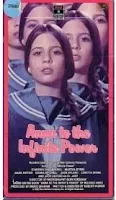
Anna To the Infinite Power (1982), based on a novel by Mildred Ames
Type: Gone and Forgotten
Creator (1985), starring Peter O'Toole.
Type: Gone and Forgotten
The Cloning of Joanna May (1991), a British Granada Television program, based on the Fay Weldon novel.
Type: Gone and Forgotten
The Third Twin (1997), based on a Ken Follett thriller.
Type: Gone and Forgotten

I don't think that it's particularly surprising that the most scientifically-realistic movies are those set in the near future, and have few science-fictional elements other than human cloning (does that make them mundane SF?). Scientific accuracy isn't what makes a box office hit, though. Blockbusters like Jurassic Park and Star Wars: Attack of the Clones end up influencing popular culture simply because so many people have seen them. That's which is why their science is worth discussing, even if it has little basis in real life.

Biotechnology Australia followed up with a second report, "Biotechnology at the Movies", which looks at a wider range of movies, from The Andromeda Strain (1971) to Children of Men (2006). Their conclusion:
"The study concluded that the science was, for the most part, seriously flawed, and that while the films may raise awareness, the quality of public debate on biotechnology is not generally enhanced by its depiction in films."
I'm doubt that will change any time soon, since stories with scientists oblivious to the ethical implications and potentially dangerous consequences of their experiments sell movie tickets.

Tags:, ,

Sunday, March 02, 2008

Janet Kagan (1946-2008)

Science fiction writer Janet Kagan died yesterday of chronic obstructive pulmonary disease (COPD), after a long illness. Her 1991 novel, Mirabile, is made up of a collection of short stories about the human settlement of the planet Mirabile. The settlers have seeded the planet with extensively genetically engineered versions of Earth plants and animals, with some organisms containing genomes of entirely unrelated species. As the protagonist geneticist Mama Jason explains it:
You see, when they shipped us off to colonize Mirabile, they were into redundancy. We got cold-storage banks of every conceivable species (I use the "we" loosely; I'm third-generation Mirabilan myself.) But on top of that we also got the redundancy built right into the gene helices of all the stored species. Some bright-eyed geneticist back on Earth had apparently gotten that idea just before the expedition set off: genes within genes, helices tucked away inside other helices.

It was a good idea in theory. If we lost a species (and lost the ability to build it ourselves), sooner or later it would pop up spontaneously - all it needed was the right environmental conditions. Given the right EC, every hundredth turtle would lay an alligator egg.
Of course, there were unintended consequences:
In practice, it was a rotten idea. We'll never lack for alligators, not on Mirabile. They didn't tell us how to turn off those hidden helices, or if they did, the technique was only described in that part of ship's files we'd lost. So we Jasons have a running battle with cattle that are giving birth to reindeer and daffodils seeding iris (or worse - cockroaches).

Meanwhile, in the manner of all genes, the hidden genes mixed. While the turtle genes were reproducing turtles, the alligator genes tucked in with the turtle genes were mixing with god-knows-what. So given the right EC, we got chimera - familiarly known as Dragon's Teeth.
Yes, the biology is extremely improbable - it's hard to imagine an entire vertebrate genome silently implanted in the genome of another (implanted microbial genomes are possible, of course) - but it does raise interesting issues about genetics, embryonic development, and the environment. In fact, the HHMI BioInteractive site has several study questions based on the biology of Mirabile (scroll to the bottom of the page), which I think could be the basis of an interesting student discussion of those topics.

I've only read the story that the quote above came from, "Kangaroo Rex", in an anthology, because, unfortunately, Mirabile is now out of print. Kagan's other works are available, however including her novel Hellspark (which has interesting aliens) and the Stark Trek tie-in Uhura's Song . On her web site you can read her short stories "Love Our Lockwood" (about an alternative history election) and "Standing in the Spirit" (a Christmas story).

Tags: , ,

Saturday, February 09, 2008

Total Recall or Little Shop of Horrors in Intro Bio?

The Onion reports on a biology teacher with a dilemma:

The Onion

Science Teacher Struggles To Justify Showing Total Recall

SOUTH BELOIT, IL—South Beloit High School biology teacher Nathan Merchant struggled Tuesday to provide a satisfactory educational reason for...

Reading the article, it sounds pretty justified to me!

Tags:, , ,

Wednesday, January 16, 2008

Learning bioscience from ReGenesis

The Canadian science fiction show ReGenesis has structural biologist (and head of the Structural Genomics Consortium) Aled Edwards to thank for it's scientific accuracy. He acknowledges that drama sometimes trumps reality.
"ReGenesis is the most accurate scientific drama out there, no holds barred, for sure," he claimed in a recent interview. He finds it difficult to watch those other popular programs [CSI and House], but isn't offended by their use and misuse of science either. "It's almost like watching a cartoon, where Batman or Superman or House is the same. When I watch Superman, I don't get upset: 'Hey, men can't fly!'" he laughed. "When I watch those shows, I turn off my scientific brain. I say I'm watching mindless entertainment here. Because if I put on my scientific brain, I'd get upset. So I just watch it and think this is not science, this is not medicine, this is television."

While he's proud of ReGenesis's devotion to basing its fictional stories on fact, he doesn't lay claim to documentary-like accuracy either. "None of these scientific programs are ultimately the truth because we have boring jobs. I sit on my ass all day in front of the computer. The action takes place in the head and you don't see anything. There's no shooting. But it's fun for people to start to realize what we do."

But educating the Canadian public about scientists and science has been taken a step further.

Part of his outreach efforts led to a couple of recent public forums, one in Vancouver and one in Hamilton, called "Revealing ReGenesis: Explore TV's Experiment with Gene Science Fact and Fiction."

Using clips from the series as conversation starters, the forums generated conversation among audience members and scientists sprinkled at tables throughout the room, as well as a panel discussion. Moderated by Jay Ingram, host of Discovery Channel's Daily Planet, the Vancouver panel was comprised of Edwards, fellow geneticist Dr. Elizabeth Simpson, ethicist Dr. Shane Green, and ReGenesis lead actor Peter Outerbridge.

"We used the draw of television and personalities to bring people there and then talk science and they realize man, that's kind of fun," explained Edwards. "That's why we were trying to link the art and the science together, because they're both about creativity and they're both about using your brain."

There is plenty of online information as well. The Ontario Genomics Institute has a companion "Facts behind the Fiction" web site, with episode guides and you can pay a virtual visit to the (fictional) North America Biotechnology Advisory Commission (NorBAC). There's even an "extended reality" game that is coordinated with each episode.

The IMDb indicates that it's appearing in the middle of the night on ABC (next episode, Monday, January 21, 1:35 AM). I'm hoping that if the writer's strike continues it gets a slot closer to prime time. Word to SciFi: I'd much rather watch ReGenesis than yet another episode of Ghost Hunters or a monstrous animal of the week movie.

Tags:, , , ,

Friday, January 11, 2008

B-Movie Biology: The Course

If you are going to be in the Northampton, MA area next week, Diane A. Kelly is going to be teaching a course in the Smith College Interterm Faculty Film Series called "B-Movie Biology". Each evening a single movie will serve as the basis for discussion an important biological concept. From her course outline:
Monday, January 14
To discuss: How does size affect the physiology of living organisms?
Them!
Nuclear tests in the American Southwest result in gigantic mutant ants that threaten cities as a team of investigators and the Army search for a way to control their spread in this Cold War-era monster film. (Gordon Douglas, director. 1954)

Tuesday, January 15

To discuss: What is a parasite, and how is its ecology different from a free-living organism?
Alien
A commercial space vehicle heading back to Earth picks up an SOS from a nearby planet. When the crew investigates, some of them leave the ship to explore the area when they come across an egg hatchery of some unknown creature. Unbeknownst to the exploring team, the ship's computer deciphers the message to be a warning, not a call for help. When a crew member disturbs one of the eggs, the parasite inside attacks him, and so begins the living nightmare. With Sigourney Weaver, John Hurt and Harry Dean Stanton. (Ridley Scott, director. 1979)

Wednesday, January 16

To discuss: How do genes control animal development?
The Fly
A brilliant scientist offers up his latest research on matter transportation to a journalist in an attempt to impress her. While his research has so far been successful, there is one last problem he discovers when attempting to teleport himself. Best line from the movie: “Be afraid. Be very afraid.” With Jeff Goldblum and Geena Davis. (David Cronenberg, director. 1986)

Thursday, January 17

To discuss: How does cloning work?
Jurassic Park
Huge advancements involving DNA extraction from ancient samples embedded in amber have enabled scientists to create an island theme park full of living dinosaurs. When the director of this island park invites a small group of scientists to visit, T. Rex and his Velociraptor friends get a little out of hand. With Laura Dern, Jeff Goldblum and Samuel L. Jackson. (Stephen Spielberg, director. 1993)

Friday, January 18

To discuss: Do genes matter when it comes to human behavior?
Gattaca (1997)
A genetically inferior man, one of the last “natural” babies born into a genetically-enhanced society that discriminates against imperfect genes, assumes the identity of a once-perfect specimen in order to remain a viable candidate for space travel with Gattaca Corp. Required to pass periodic gene tests, he must be diligent in his use of DNA samples from his assumed identity’s hair, skin and blood to remain undetected. How long and to what extremes must he go to continue the charade? With Ethan Hawke, Uma Thurman, Maya Rudolph and Gore Vidal. (Andrew Niccol, director. 1997)
It sounds like an interesting way to spend a cold winter evening!

Tags:, , , , ,

Tuesday, September 11, 2007

Farandolae

"Mitochondria are tiny little organisms living in our cells. That gives you an idea of how tiny they are, doesn't it?"

"Enough."

"A human being is a whole world to a mitochondrion, just the way our planet is to us. But we're much more dependent on our mitochondria thn the earth is on us. The earth could get along perfectly well without people, bu if anything happened to our mitochondria, we'd die."
- A Wind in the Door by Madeleine L'Engle (1973)
I'm a bit sad that my first "back from vacation" post is in memory of Madeleine L'Engle, who died last Thursday at the age of 88. A Wrinkle in Time, a wonderful mixture of science fiction and fantasy, was one of the favorite books of my girlhood.

In the sequel, A Wind in the Door, L'Engle introduced legions of elementary school students to mitochondria. And not just the fact that mitochondria are important organelles inside our cells, but the idea that our mitochondria are derived from symbiotic prokaryotes. This was a cutting edge (and controversial) idea when A Wind in the Door was published in 1973, the endosymbiotic theory of mitochondrial origins having been proposed by Lynn Margulis just six years earlier.
"Your parents are scientists, aren't they?" She did not wait for an answer. "Let's see what you have to tell us."

Charles Wallace ("You should have known better!" Meg scolded him that night) stood and said, "What I'm interested in right now are the farandolae and the mitochondria."

"What was that, Charles? The mighty what"

"Mitochondria. They and the farandolae come from the prokaryocytes ---"

"The what?"

"Well, billions of years ago they probably swam into what eventually became our eukaryotic cells and they've just stayed there. They have their own DNA and RNA, which means they're quite separate from us. They have a symbiotic relationship with us, and the amazing thing is that we're completely dependent on them for our oxygen."

"Now, Charles, suppose you stop making silly things up, and the next time I call on you, don't try to show off. Now, George, you tell the class something . . . "
Now, the science isn't quite right: mitochondria don't produce oxygen. They do use oxygen, though, to generate ATP, which the cell then uses as a source of chemical energy. Mitochondria are essential to our utilization of oxygen as an energy source. L'Engle may have confused mitochondria with chloroplasts, which are found only in plants. Chloroplasts also are thought to have originated endosymbiotically and they do produce oxygen as a byproduct of the conversion of carbon dioxide and water to glucose during photosynthesis.

And that brings us to the farandolae, which are microscopic life forms inside mitochondria. Just as mitochondria are necessary for our cells, farandolae are essential for our mitochondria. They are, of course, entirely fictional and that's where the story slides into fantasy. Unlike our mitochondria, which are derived from ancient prokaryotes, the farandolae are living organisms that have names and can communicate, in a fashion.

Despite - or because of - L'Engle's imaginative take on cell biology, many kids were inspired to study science. The story inspired blogger the dubious biologist's PhD work:
Ms. L’Engle is the one of the deities of my childhood pantheon, right after and essentially tied with Ray Bradbury. I pretty much wore out the library copy of A Wrinkle in Time. Her Time Trilogy was the first book set I ever bought with my own money. I learned about tesseracts and mitochondria from Ms. L’Engle. I even quoted from A Wind in the Door in my Ph.D. dissertation.

I was fascinated by what she called the “farandolae”, living beings within the mitochondria that were born and grew as freely mobile slyph (as I envisioned them) organisms but then had to mature and root themselves in order for the mitochondria to survive. When I saw my first micrograph of the inner mitochondrial membrane, I was mesmerized by the small bumps that would eventually be identified as the FoF1 ATPase or ATP synthase. The key to making the energy of life in the powerhouse of the cell! In the back of my mind, I’ve always thought of them as farandolae.
The power of science fiction - even when the "science" is largely fictional - to stimulate kids' interest in science is one of the reasons I think science fiction books should be included in every elementary and high school reading list.

Thanks for the farandolae Ms. L'Engle!

Tags:, , ,

Monday, August 13, 2007

Biology in Science Fiction Roundup: August 13 Edition

There doesn't seem to have been much biology-related SF news from the post week. Maybe I'm not reading enough blogs? Or maybe it's because the only SF TV show premiering was the disappointing (and non-biological) Flash Gordon on SciFi. Anyway, here are a few tidbits:

SciFi Weekly reviews the Cartoon Network movie Ben 10: Secret of the Omnitrix, which has the same characters as the Ben 10 series.
It's business as usual when the dastardly Dr. Animo is attempting to turn a nuclear reactor into a DNA bomb that will de-evolutionize the world. Gwen, who'd really rather be shopping at the mall, and her grandfather, Max, are literally all tied up in the midst of Animo's evil plan. Luckily, it's 10-year-old Ben Tennyson to the rescue in the form of Heatblast, one of the 10 alien creatures he can change into thanks to the alien device known as the Omnitrix.
It premiered last Friday night, but probably will be shown again. Check our local listings!

Discover Magazine tells us "What You Can Learn from Zombie Moves": science, consumerism and the soul.

USA Today talks to physics professor Paul Halpern
about science on the Simpsons, and his new book "What's Science Ever Done For Us: What the Simpsons Can Teach Us About Physics, Robots, Life, and the Universe." Despite the title, he tails a fair bit about biology:

In one episode, Homer makes a tomato-tobacco hybrid plant by putting plutonium in the soil. Plutonium in the soil would not produce a hybrid "tomacco" plant, Halpern says. But there have been documented cases of grafting together tobacco and tomato plants to produce a tomato plant with traces of nicotine.

In another episode, Bart and Lisa find a strange three-eyed fish in a river near Mr. Burns' power plant. To counter the idea that nuclear power produced the mutation, Mr. Burns launches an ad campaign portraying Blinky the fish as the next step in evolution through natural selection — a "superfish."

But natural selection takes generations, Halpern says, and successful varieties must maintain a survival advantage over others. To prove his assertion, Mr. Burns would have to track three-eyed fish over time to see whether the extra eye allows them to spot food more quickly or elude predators.
Tags:,

Friday, July 13, 2007

Julie Czerneda's Species Imperative Trilogy

Fantasy Book Spot reviews Canadian Science Fiction writer Julie E. Czerneda's 2005 novel, Survival, Book 1 of her Species Imperative trilogy (via Andrew Wheeler at ComicMix).
Our hero, Mackenzie Winifred Elizabeth Wright Connor, is a biologist studying the recovery of salmon in the Pacific Northwest. She has pledged devout loyalty to her salmon and pointedly ignores the goings-on of life on other planets, even when that life is being mysteriously wiped out. She is volunteered by the Ministry of Extra-Sol Human Affairs when an alien scientist, notable in his field of archeology, comes to beg her assistance in the search for the killers. Brymn is a Dhrin, a species that has ignored biology to the point of forbidding the study of all biological sciences. He hopes her experience in studying the survival of salmon will translate to knowing how to insure the survival of the Dhrin. One thing leads to another, of course, and she is soon embroiled in galactic politics as well as a fight for the survival of mankind.
Fantasy Book Spot rates it a "10". The other two books in the series are Migration and Regeneration.


Czerneda was formerly a researcher in animal communication and her fascination with biology on Earth has inspired her alien species. As she said in an interview with Strange Horizons:
JC: I use what I know about the mechanics and motivations of animal communication when building my aliens, definitely. For example, Esen, the main character of my Web Shifters books, typically finds herself either at an advantage or disadvantage due to a form's ability to communicate. I also like to put humans into situations where they have to communicate with the non-human, then show the potential for misunderstanding. Such fun. One of my favourites has been the Drapsk, from the Trade Pact books (A Thousand Words for Stranger, Ties of Power, To Trade the Stars). I loved finding ways to make communication technology for beings who smell meaning.
Czerneda has long been an advocate of using science fiction as a tool for science literacy (see her guide for teachers No Limits: Developing Scientific Literacy Using Science Fiction and the recently released science fiction short story collection Polaris: A Celebration of Polar Science), and that was part of the inspiration for the Species Imperative series.
LT: Tell us about Species Imperative: Survival, just out in May 2004. What sparked the idea for this novel?
JC: The idea echoes back to my interest in encouraging scientific literacy, particularly in biology. I mean, if we don't understand ourselves as living things, how can we hope to make informed choices? I wanted to write about a situation where there are many intelligent species, coexisting in space, all sure the big problems have been solved as long as everyone pays their bills, but. . .my "but" is that one of those species has an unsuspected biological drive, a "species imperative" that will come to threaten all the others. I chose migration, because staying on your side of the fence is part of being a polite neighbour. If you must migrate, rules of territory and property are lost. What happens then? Not to mention, I've made that migration a little more dangerous than most.
Czerneda's latest novel, Reap the Wild Wind will be available in September.

Find more books by Julie Czerneda at the Amazon Biology in Science Fiction store.

Tags:, ,
Note: Links to Amazon.com are affiliate links. As an Amazon Associate I earn from qualifying purchases.