Showing posts with label behavior. Show all posts

Friday, November 23, 2012

Science and SF tidbits: middle-aged apes, fantastic cells, and SF genetics

Some recent reading about fictional biology:
JIM: the movieJIM: More Compelling Than GATTACA | DNA Science Blog »

If you are looking for a science fiction film with a scientifically plausible depiction of human genetic enhancement and cloning, you might want to check out JIM. Science writer/geneticist Ricki Lewis reviews the film and says:
"Although Jim, released in late 2010, shares with GATTACA the premise of widespread genetic enhancement, it’s much more subtle and nuanced. The film struck me with its stunning possibility, and the intentional gaps in the glimpse of future history still have me thinking a week later."
And watch a commercial for "Lorigen Engineering", which offers Better Kids, By Design®'


Tom Crosshill's recent short story "A Well-Adjusted Man" takes a chilling look at the potential repercussions of erasing traumatic memories might have. In his interview with Lightspeed Magazine, talks about the psychology PTSD, the biochemistry of traumatic memories, and his inspiration for the story.

And some fantastic factual biology:

Orangutan PortraitGreat apes go through mid-life crisis » Nature News

Psychologist Alexander Weiss and his colleagues wanted to find out if the human "midlife crisis" that hits somewhere between our mid-30s and 50s could have a biological basis. They decided to survey zookeepers about of the mood of the chimpanzees and orangutans in their charge. They found that our great ape cousins seem to have lower sense of well-being during their late 20s to mid-30s - the equivalent to human middle age.

It would have been nice if the study had included some quantifiable data, such as the level of stress hormones or other physiological measures. It's hard to know how much bias might be introduced by asking zookeepers to try to put themselves in the minds of their charges. But still, an interesting study.

Image: Orangutan Portrait by Chester Zoo on Flickr shared under a CC BY-ND 2.0 license.


Introduction to Cells (Vimeo)

A dramatic video showing the beauty of cells. The video was created by science teacher Frank Gregorio who makes "introduction" science videos for middle and high school teachers to use in the classroom. I wonder how well it works to capture the imagination of fidgety teenagers?

Paralyzed dogs walk again (video)

Jasper the dachshund regained some use of his formerly paralyzed hind legs after his spinal cord was injected with cells grown from the lining of his nose. Robin Franklin and his colleagues at the University of Cambridge, used nose cells (or more precisely olfactory ensheathing cells) because, unlike most nerve cells, the nasal nerve fibers continue to grow into adulthood. The injected cells grew new nerve connections restoring function to the dog's damaged spine.

While the treatment appears to have a lot of potential it will take a lot more research before it will be tested on humans. More about the study at the University of Cambridge.

Chemical biology: DNA's new alphabet

Chemist Eric Kool is reengineering DNA with nucleotide bases not found in nature. He's one of a number of chemists and chemical biologists who are creating new types of DNA and RNA molecules that they hope can be used for studying the function of nucleic acids and that may have new biochemical properties. But Kool explains those aren't the only reasons:
".... researchers are still driven by what Kool calls the “science-fiction appeal” of designing or even improving on living systems. Earth's early life forms may have settled on their genetic alphabet simply because they were constrained by the chemicals available. [snip]
So if nucleic acids arose independently on another planet, would they have the same bases? Benner thinks not, unless the organisms were subjected to the same constraints. Some universal rules might apply, however."
And short of discovering extraterrestrial life, it's only by synthesizing and testing new molecules to see if they might be functional in living systems.

Thursday, November 01, 2012

Science & SF Tidbits: Nov. 1: Biology of Politics and Sci-Fi Sleep

Today's suggested links:

Science In My Fiction » Sleeping Fiction »

In science fiction, characters are rarely depicted as having a need for sleep. Sure they are put into suspended animation while traveling long distances or as the plot requires, but what is often overlooked are the biological functions of sleep. Studies have suggested that sleep may be important for learning, properly regulating our metabolism, our personalities, our health, our moods, and probably more.

A pretty common science fiction trope is that you can quickly learn by being fed information while sleeping. While there isn't good evidence that that is really possible, even now you can buy recordings that claim they can change your habits (like your desire to smoke) by simply listening while sleeping. So how might (science fictional) pills that replace the physiological need for sleep work - would they also be able to replace the psychological and learning processes that sleep provides as well? Something to think about.

Image: Astronauts Richard "Dick" Truly and Guion Bluford sleep on the space shuttle Challenger. Truly sleeps with his head at the ceiling and his feet to the floor. Bluford, wearing sleep mask (blindfold), is oriented with the top of his head at the floor and his feet on the ceiling. Source: NASA (public domain)

Nature News » Biology and ideology: The anatomy of politics

Do your genes or your physiological state affect the way you vote? Or is your environment and upbringing the deciding factor? Studies of the political and ideological leanings of twins suggest that there is at least some biological component to our politics. Whether that is more important than the influence of family, education and the way information is provided to us is still up in the air.

But I find the results of one study particularly interesting: people who have high levels of the stress hormone cortisol are less likely to vote at all. It makes me wonder if people who are under a lot of stress due to poverty, or because they live in an area affected by a natural disaster, or because their beliefs or lifestyle are different enough from their neighbors that they feel ostracized are indeed less likely to vote. That seems like it could significantly affect election results.

Read the linked articles for more details. 

Sunday, October 21, 2012

Science & SF Tidbits: Oct 21, 2012: Sequencing Martian DNA, Animal Language, Anthropology SF

More bioscience and science fiction bits from around the web:

Genome Hunters Go after Martian DNA - Technology Review »

It's a race: two biotech companies - J Craig Venter's Synthetic Genomics and Jonathan Rothberg's Ion Torrent - want to send a DNA sequencing machine (made by their company, of course) to Mars. Both companies are adapting their hardware for Martian conditions, and are testing them in Mars-like Earthly sites like the Mojave Desert.

The advantage to sequencing the DNA of Martian microbes while on the planet, rather than sending the sample back to Earth - is that it makes contamination from Earthly life less likely. The experiment would have an incredibly high payoff, if any DNA were found to be sequenced.

Undaunted by the lack of any evidence that Mars currently hosts microbial life, Venter is already talking about reconstructing Martian organisms from their DNA sequence in a super-secure laboratory on Earth.
"People are worried about the Andromeda strain," says Venter. "We can rebuild the Martians in a P-4 spacesuit lab instead of having them land in the ocean."
I'm pretty sure this is a publicity stunt, but it's a fun one to think about the possible results if it were actually successful.

Is language unique to humans? » BBC Future

Parrots, bonobos, dolphins and even dogs can learn to understand human words and sentences. But is that language? Maybe not, if you think of language as a method of computation rather than a means of communication.
"What makes human language unique is not that it allows us to communicate with each other, but that it allows us to do so with infinite variety. A monkey can scream to warn its troopmates of an approaching predator, or alert them to a cache of tasty food, but it can't communicate something like "doesn't that hawk have a funny looking beak?" or "with a little salt, this fig would taste divine"."
How to Read Like a Science Nerd » New York Times Magazine

Science writer Maggie Koerth-Baker shares her book recommendations with The New York Times and recommends a science fiction classic:

“Lilith’s Brood,” by Octavia Butler, is the best book about an alien invasion that I have ever read. It’s smart, and it’s deeply human, and (as a former anthropology major) I think it should be on the required-reading list for anyone interested in cultural anthropology.
I agree with her recommendation. Butler's Lilith's Brood (also known as the Xenogenesis Triology) should be required reading for all SF fans, not just anthropology enthusiasts. It asks the uncomfortable question of whether alien takeover might actually be for our own good.

Image: Parrot Culture by Marendo Müller. Public Domain.


Friday, August 26, 2011

Twittering with Aliens @ SIMF

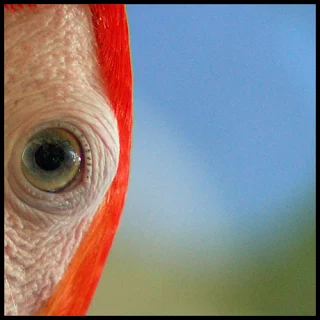
I have a new post up at Science in My Fiction about learning the language of aliens right here on Earth. he photo on the right is a hint about the sort of creature involved.

Go check it out!

Image credit: Body parts I - What are you looking at? by Sami__, on Flickr

Thursday, June 11, 2009

Astronomy Science Fiction: Now with Biology!

When the subject of science in science fiction comes up, it seems like many people immediately think of physics and astronomy and, of course, astrophysics. That's not particularly surprising - from its early beginnings SF has featured exploration of other planets, stars and the vast spaces between them.

The short story anthology Diamonds in the Sky is an excellent continuation of that tradition. Edited by science fiction writer and astronomer Mike Brotherton, and funded in part by the National Science Foundation, each story in the anthology features a particular aspect of astronomy and includes an afterword about the science. And, being biased towards my own science background, it's nifty that several of the stories have some biology in them too.

So here are links to those stories, with a wee bit about their relevance to bioscience.

The Moon is a Harsh Pig by Gerald M. Weinberg
Astronomy topics: Phases of the Moon, Misconceptions about Astronomy
Biology topic: Effect of the moon on behavior.
Additional reading: Pull of the Moon: Tales of the Moon's effects on animal behaviour are not just moonshine"

Jaiden's Weaver
by Mary Robinette Kowal
Astronomy topic: Planetary Rings
Biology topic: life on a ringed planet

Squish by Daniel M. Hoyt
Astronomy topic: The Solar System
Biology topic: Uploading consciousness into new bodies.
Additional reading: my old post on Charlie Stross's short story "Lobsters" (which also has a bit of astronomy)

Approaching Perimelasma by Geoffrey A. Landis
Astronomy topic: Black Holes
Biology topic: Effect of black holes on the body
Additional information: Neil DeGrasse Tyson on "Death by Black Hole" (YouTube)

To read all the stories, download the Diamonds in the Sky anthology.

Image from Alexander Jamieson: 'A Celestial Atlas Comprising a Systematic Display of the Heavens in a Series of Thirty Maps' (via BibliOdyssey)
Tags:, ,

Monday, December 22, 2008

The Biology of Peace


They did terrible things to each other because they could not have children. But before the war - during the war - they had done terrible things to each other even though they could have children. The Human Contradiction held them. Intelligence at the service of hierarchical behavior. They were not free. All he could do for them, if he could do anything, was to let them be bound in their own ways. Perhaps next time their intelligence would be in balance with their hierarchical behavior, and they would not destroy themselves.

~ Adulthood Rites, by Octavia Butler
In Octavia Butler's Xenogenesis trilogy (aka Lilith's Brood) the very alien Oankali collect the remnants of humanity that have survived global nuclear war. The remaining humans are stored aboard their interstellar ship while both they and the flora and fauna of the Earth are "repaired" using the Oankali's superior biological engineering skills. The humans are eventually given a choice: they can join the Oankali, living with them in bioengineered settlements and trading their genes to create Human-Oankali Construct children, or they can live as resistors, with an extended life span and free from the aliens' presence, but completely sterile. They are not allowed to have children because the Oankali believe that the "Human Contradiction" - intelligence coupled with hierarchical behavior, inherited from our ape-like ancestors - would always ultimately lead to the destruction of the human race.
"The Oankali believe . . . the Oankali know to the bone that it's wrong to help the Human species regenerate unchanged because it will destroy itself again. To them it's like deliberately causing the conception of a child who is so defective that it must die in infancy."
~ Imago, by Octavia Butler
Now a new nonfiction book by science writer Thomas Hayden and reproductive biologist Malcolm Potts - Sex and War: How Biology Explains Warfare and Terrorism and Offers a Path to a Safer World - makes essentially the same argument. In an article for the December 19th issue of New Scientist they present an overview of their thesis that is based, in part, on our similarity to our close biological cousins, the chimps:

Chimpanzees -- and virtually every hunter-gatherer society studied -- live in male-dominated social groups, in which the males are blood relatives and females move from one group to another. The dominant males largely monopolize breeding opportunities, leaving younger males with little choice but to work their way up the in-group hierarchy, or to launch attacks on neighboring out-groups if they are to secure the resources, territory, and females they require to survive and pass on their genes.

We are all descended, in other words, from the victors in conflicts over resources, territory, and mates. The majority of those battles was instigated and fought by males, with the most skilled, ferocious and cunning surviving to pass on their genes. Human males today bear the marks of this legacy in the behaviors and impulses that still spur us on to lethal conflict -- including the widespread and devastating association between war and rape -- even when other solutions might be both available and preferable.
It sounds very much like they are arguing that biology is destiny - male biology, anyway. It would seem that the Butler's Oankali are right, our evolutionary heritage has doomed to a continuous cycle of war and violence. But that would be too downbeat to make a very good (or at least salable) book. Hayden and Potts don't think it's all that bleak. They argue that the proper kind of "nurture" can win out over "nature":
But crucially, the fact that war is an evolved behavior does not in any sense condemn us to a future as bloody as our collective past. Behavioral predispositions function in response to environmental stimuli: change the environment, and you change the biological response. In Sex and War; we show that a series of relatively simple strategies, including the empowerment of women and slowing population growth, can help the biology of peace win out over the biology of war.
I confess that to some skepticism, though, about both their hypothesis and their solutions. That's pretty much a knee-jerk response on my part to anyone who gives seemingly simple evolutionary explanations for what are often complex human behaviors. I'll have to read the book before I can actually give a knowledgeable opinion one way or the other. I will say that empowerment of women sounds like a far better solution to create peace than losing our humanity altogether.

Related Information:


Image (top): "The 'Real' American Soldier" by Aaron Escobar on Flickr
Image (bottom): Chimp Maaike by belgianchocolate on Flickr
Tags:, , , , ,

Tuesday, July 29, 2008

Could We Evolve Into The Culture?

Scottish science fiction writer Iain M. Banks has set a number of his stories in a pan-galactic civilization known as "The Culture". The culture of The Culture is shaped by the unique requirements of a space-faring civilization, which is necessarily self-sufficient. In The Culture universe humans and artificial intelligences cooperate so that neither is exploited, "labor" is closer to what we would consider a hobby, and education is a lifelong process. On top of that, advances in genetic engineering allow everyone to be healthy. Banks gave an overview of the Culture back in 1994:

Thanks to that genetic manipulation, the average Culture human will be born whole and healthy and of significantly (though not immensely) greater intelligence than their basic human genetic inheritance might imply. There are thousands of alterations to that human-basic inheritance - blister-free callusing and a clot-filter protecting the brain are two of the less important ones mentioned in the stories - but the major changes the standard Culture person would expect to be born with would include an optimized immune system and enhanced senses, freedom from inheritable diseases or defects, the ability to control their autonomic processes and nervous system (pain can, in effect, be switched off), and to survive and fully recover from wounds which would either kill or permanently mutilate without such genetic tinkering.

And the biological alterations go beyond basic protection from disease and disability. Culture humans can modify their own physiology for the purpose of pleasure.
The vast majority of people are also born with greatly altered glands housed within their central nervous systems, usually referred to as 'drug glands'. These secrete - on command - mood- and sensory-appreciation-altering compounds into the person's bloodstream. A similar preponderance of Culture inhabitants have subtly altered reproductive organs - and control over the associated nerves - to enhance sexual pleasure. Ovulation is at will in the female, and a fetus up to a certain stage may be re-absorbed, aborted, or held at a static point in its development; again, as willed. An elaborate thought-code, self-administered in a trance-like state (or simply a consistent desire, even if not conscious) will lead, over the course of about a year, to what amounts to a viral change from one sex into the other. The convention - tradition, even - in the Culture during the time of the stories written so far is that each person should give birth to one child in their lives. [. . .]

And the genetic alterations to humans can also allow them to breed with other species, helping integrate humanity into the Culture, which involves a number of alien civilizations.

Last week Banks invited readers to submit questions, from which he picked the most interesting to answer. One reader asked what the most important development would be for humanity to evolve into a Culture-like civilization. He thinks that it's an unlikely genetic alterations that would allow it to happen:
Genetically modifying ourselves, I suspect. Finding the set of genes that code for xenophobia in general - these days usually expressed though sexism, racism, homophobia, anti-semitism, Islamophobia, Romaphobia and so on (and on, and on) - and knocking them out. Possibly then we'll be nice enough for the Culture or something like it. Of course maybe inventing true AIs will be enough, always assuming that they're as benign - and yet sympathetically interested in us - as they are taken to be in the Culture.
Certainly fear and loathing of "the other" is detrimental to the development of the kind of healthy and scarcity-free civilization like The Culture. However, it's likely that prejudice is largely based on environment and experience rather than our genes, so there won't be any easy genetic engineering fix. I'm hoping there will be a steady change in humanity towards less prejudice, but I suspect it will be a painfully slow process.

Related links:

Tags:, ,

Saturday, June 21, 2008

Biology in Science Fiction Roundup: June 21 Edition

Here are the some of the biology in science fiction links for the past couple of weeks:

Movies

Dan Vergano at USA Today interviews M. Night Shyamalan about the science in The Happening.

Jonah Lehrer at The Frontal Cortex writes about M. Night Shyamalan's (not too educated) thoughts on the placebo effect.

At the SciAm Observations blog gmusser asks "Is M. Night Shyamalan anti-scientific?"

The Takeaway has caller reviews of The Incredible Hulk and The Happening (via Blog Around the Clock)

Cleolinda Jones has "The Happening in Fifteen Minutes" (via Evolving Thoughts)

The Economist has an article that discusses concerns about human overpopulation, Malthus, and The Population Bomb:
Paul Ehrlich's best-selling 1968 book “The Population Bomb” gloomily declared that “the battle to feed humanity is over”, predicted huge famines in the 1970s and 1980s and forecast an American population of just 22m by 1999. Others made better predictions but got the consequences wrong. Harry Harrison’s novel “Make Room! Make Room!”, was published in 1966 and inspired “Soylent Green”, a cult film. It forecast a global population of around seven billion by 1999 (the actual figure was six billion), but his dystopian predictions of rationed water and social breakdown did not materialise.
io9 has a clip of William Hurt "de-evolving" in the 1980 movie Altered States.

John Scalzi writes about nerdgassing - kvetching about science or continuity errors - for SciFi Scanner. (Regular readers here will be familiar with the concept). He nerdgasses about The Matrix:
For all that, there's one thing that always makes me yell at the screen -- when Morpheus is explaining to Neo that the machines use human body heat as a power source. What he actually says is that the machines use human body heat "combined with a form of fusion." Fusion, you know, being the form of nuclear energy released by the sun, and which both releases far more energy and is massively more energy efficient than sucking BTUs out of the human metabolism. Saying the Matrix runs on body heat and "a form of fusion" is like saying your car runs on a combination of body heat and "a form of internal combustion," since body heat is required to move your muscles to push down the accelerator pedal.
On BiotechNation Moira Gunn talks to Peter Lee, CEO of Aukland UniServices. He discusses the combination of biology, engineering and computer modeling that is used for digital simulation of biology, giving us Hollywood creatures like King Kong. Listen to the interview.

Television

The DVD version of the brief Masters of Science Fiction series is about to be released in the US. Charlie Jane Anders at io9 says that "Jerry Was A Man" - about a "genetically engineered chain-smoking slave who seeks his freedom" - is a standout episode.


Cool Biology

The Wall Street Journal reviewed the new collection of futurist essays Year Million: Science at the Far Edge of Knowledge.
Most of the authors agree, however, that if we survive we will become very, very smart. The IQ gap between our descendants and us, one essayist estimates, will be greater than the gap between us and tiny worms called nematodes, which can't even balance a checkbook. In the near term, perhaps beginning in this century, we will soup up our bodies and minds with genetic engineering, nanotechnology and bionic implants. Not only will our cyborg descendants be immortal; they will also enjoy telepathic broadband communication with one another via wi-fi-equipped brain chips, resulting in a global mind-meld that physician Steven Harris describes as "the Internet on crank."

Scientists from Brazil and the Netherlands recently discovered parasites can induce their caterpillar hosts to guard the parasites' offspring.
After parasitoid larvae exit from the host to pupate, the host stops feeding, remains close to the pupae, knocks off predators with violent head-swings, and dies before reaching adulthood. Unparasitized caterpillars do not show these behaviours. In the field, the presence of bodyguard hosts resulted in a two-fold reduction in mortality of parasitoid pupae.
Watch video of the behavior.

Carl Zimmer writes about the early years of genetic engineering, when the organism of choice was the bacterium E. coli and fears ran deep:
Engineering E. coli came to be known as the Frankenstein project. The protests sometimes took on almost religious tones. Tampering with DNA, the MIT biologist Jonathan King declared, was "sacrilegious." Two political activists, Ted Howard and Jeremy Rifkin, condemned genetic engineering in a book called Who Should Play God?
Mike Brotherton has an interesting post about what a planet orbiting a cool M star would look like. The obvious answer is "red", but it turns out it's a bit more complicated than that.

Neurotic Physiology writes about a Cameroonian frog that has claws that are only exposed when stressed:
Lemme repeat that last bit: the frog BREAKS ITS OWN BONES AND SHOVES THEM THROUGH THE SKIN AS CLAWS. Not only that, this particular frog is known as the “hairy frog”, due to the growth of hair-like skin strands that the males grow during breeding season. It has sideburns! This is the freakin’ Wolverine of the frog world! I hereby declare that this frog be renamed “The Wolverine Frog”, or perhaps “the wolver-frog” for short, in honor of our favorite hirsute self-multilating X-Man.
Phil Plait at Bad Astronomy has a good post about the significance of the recent finding that meteorites contain purines and pyrimidines - organic molecules that help make up our DNA, RNA and nucleotides.

Wired Science asks what the ethical implications might be of finding microbial extraterrestrial life on Mars or an asteroid.
"Fundamentally, the question is what it means to be a space-traveling species, and what counts as being an ethical space traveler. What sort of obligations if any do we owe to any extraterrestrial life that we encounter, whether it's intelligent or not?" he asked.

Nina Munteanu looks at whether killer plagues will wipe us out and what the color of alien plant life might be.

Charlie Stross writes about the Singularity, transhumanism and religion.

There's a feature on Salon.com about creating transgenic goats that secrete drugs in their milk. One of the scientists profiled respond to some people's fears about genetic engineering of animals:
He scoffs at the implication that GTC's operations are even in the Dr. Moreau ballpark. "People say, 'Are they breeding centaurs out there, some kind of man-goat beast?' No, of course not. We put a control sequence in the transgene to make sure it's only turned on during lactation. And there's a big difference between manipulating a single gene, like we're doing, and manipulating a whole chromosome. Treating them the same is like saying, 'I moved my brother-in-law into his new apartment with a pickup truck. Now I'm going to move all of New York City with that same truck.'"
Robert Full spoke at TED about how engineers learn from animals - think of robots inspired by geckos and ants. Watch the video.

Tags:,

Monday, June 02, 2008

Christopher Rose on Teaching Biology with Movies

James Madison biologist Christopher Rose has written an interesting essay for Evolutionary Biology1 about using movies to teach biology (HTML version, pdf version). He points out that public understanding of biology is poor in part because the public is bombarded with jargon and sensationalized sound bites that are presented with little scientific context.
As with many relationship issues, the root of the problem and its solution lie in communication. Scientists as a group love to fault movies for inaccurately portraying facts, procedures and theories, and misrepresenting the benefits and risks of scientific phenomena to humanity (see references in Crichton, 1999; Kirby, 2003). As a scientist myself, I share their concerns. However, as a moviegoer, I agree with Crichton (1999) that making movies and representing science are often at odds with each other simply because entertainment and education are different things. Fictional movies cannot be bound to a strict code of scientific realism if they are to entertain and make money. Also, movies can only portray external experiences, meaning that the internal experiences of creative and critical thinking inevitably get left out. At the same time, movies can convey intriguing ideas and provocative viewpoints about the roles of science in life and society. As a science teacher, I argue that movies provide opportunities to educate not by finding faults, but by making connections to real science (Rose, 2003). This article is designed to illustrate how science teachers and popular science writers can use movies with genetics and developmental biology themes to clarify and deepen the public understanding of science. As movies cannot replace textbooks, I must start with a brief overview of these areas of biology and the fundamental knowledge required to discuss them.
The article is written with non-scientists in mind and even has a glossary of biological terminology at the end. Some of his suggestions for movies that can be used as teaching tools:
  • The Fly (1958 & 1986): Discussion of the role of genes in animal development and evolution, and formation of chimeric animals
  • The Boys From Brazil (1978): Cloning somatic cell nuclear transplantation
  • Jurassic Park (1993): How DNA "builds" an organism
  • GATTACA (1997): Use of recombinant DNA technology and human genetics
Rose actually teaches a course on "Biology in the Movies" at James Madison, and his course page has a course syllabus and links to questionnaires he uses with some of the movies. In addition to the movies listed above, his syllabus also includes Inherit the Wind, Quest for Fire, Blade Runner and Contact.

1Rose CS. "Biology in the Movies: Using the Double-Edged Sword of Popular Culture to Enhance Public Understanding of Science." Evol Biol 34(1-2):49-54 (2007). doi:10.1007/s11692-007-9001-8

Tags:, , ,

Monday, March 31, 2008

Good News for Mrs. Frisby

Japanese scientists have taught degus - rat-like rodents - to use a rake to obtain food.


Technovelgy points out the similarity of the tool-using degus to the intelligent rodent-like creatures in H. Beam Piper's Little Fuzzy, and the Watchmakers in The Mote in God's Eye by Larry Niven and Jerry Pournelle.

The first fictional reference that sprang to my mind was Robert O'Brien's Mrs. Frisby and the Rats of NIMH, one of my childhood favorites. In that story, rats escape from the National Institute of Mental Health, where they were part of an intelligence-enhancing experiment. They end up on a farm where the mouse Mrs. Frisby lives. The rats use their superior intelligence and ability to use tools - not just raking, but building motors and the like - to help move Mrs. Frisby and her sick son to a new home before their old one is destroyed. The NIMH rats are both smart and dexterous. I wonder if the degus can top that?


My previous post on the biology in Mrs. Frisby and the Rats of NIMH.

Download Little Fuzzy for free from Project Gutenberg.

Tags:, , ,

Sunday, February 24, 2008

Amy Thomson on Alien Aliens

Amy Thomson's 1995 novel The Color of Distance is the story of Juna, the only survivor of a human survey mission on a distant planet - Tendu - with very inhuman inhabitants. Thomson was recently interviewed by io9 about creating truly alien aliens.
Yes, I think writers can and have created really alien lifeforms. The aliens in Octavia Butler's Xenogenesis trilogy, Robert Forward's neutron star dwellers in Dragon's Egg, and many others come to mind.

That said, it isn't easy to create really alien-seeming aliens. There are plenty of books with aliens that are just humans in funny suits in a lot of books. Sometimes that's all the story needs. More often it's not.

For me, I find the easiest way to create a really alien-seeming culture is to start with an animal and ecological model. For example, the Tendu and the rainforest, and the harsel and the ocean. I try to avoid mammalian animals, because warm and furry is too familiar, and to anthropomorphize. In
The Color of Distance, I based the Tendu on tree frogs. The harsels are based on whale sharks, cold blooded, water-breathing filter feeders. I also try to give my aliens a very different reproductive biology than humans. I find that it gives them very different drives and motives.
Read the whole interview for her take on Star Trek-type humanoid aliens, death, environmental balance, and her what she is writing now.


Tags:, , ,
Note: Links to Amazon.com are affiliate links. As an Amazon Associate I earn from qualifying purchases.