It's been a while since I did a round up, so there are lots of links!
General SFSF Signal has
video of a 1997 discussion between Harlan Ellison, J. Michael Straczynski, Herb Solow and Yvonne Fern about the meaning of the terms "science fiction" and "SciFi". Be sure to read the comments too.
Livemint.com has an
extensive article about the state of science fiction in India with a number of video interviews with Indian SF writers, including Indian Science Fiction Writers Association secretary (and frequent commenter here) Arvind Mishra, Mohan Sanjeevan, Nellai Muthu, YH Deshpande, and GS Unnikrishnan.
John Scalzi points out that
Technology Changes, People Not So MuchUrsula LeGuin and George RR Martin
appeared on the public radio show To The Best of Our Knowlege, and discussed the future of science fiction and the genre boundaries between fantasy and science fiction (via
io9)
Written WordThere's
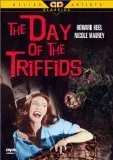
a great post at Metafilter about John Wyndham (author of
Day of the Triffids), including links to the BBC Four documentary "The Invisible Man of Science Fiction".
The
2009 One Book - One Edinburgh reading campaign will feature Sir Arthur Conan Doyle's
The Lost World.
In 2009 it will also be 200 years ago that Charles Darwin was born, who also has ties to our city. It was during his study at the University of Edinburgh that he developed a keen interest in natural history, and it was here and around the Forth that the foundations for his theory of evolution were developed.
To mark this double celebration, it seems only natural that the 2009 reading campaign - The Lost World Read 2009 - will focus on Conan Doyle's classic adventure story, The Lost World, in which a group of explorers set out on an expedition to South America to prove that deep in the jungle there is a forgotten world where dinosaurs and other prehistoric animals still survive.
They will be distributing thousands of free copies of
The Lost World with a special cover by Aardman Animations, as well as a comic book biography of the life of Charles Darwin.
Moira Gunn at ITConversations has posted her
2003 interview with Michael Crichton about his novel Prey.
MoviesAnnalee Newitz at io9
has a detailed review of The Day The Earth Stood StillBioethicsBytes has a
discussion of the 2004 DeNiro cloning movie Godsend.
Chris Mooney writes about the new science-Hollywood venture, The Science and Entertainment Exchange.
At io9 Lauren Davis rounds up
Science Fiction's Deadliest PlantsThere will not, as rumored, be a sequel to I Am Legend, but plans for a prequel apparently are real.
Rich Handley has recently published
Timeline of the Planet of the Apes: The Definitive Chronology. It sounds like it provides the background information on how the apes came into power on Earth, including a bunch of biology:
- How the apes acquired sentience and the power of speech—while man descended into mute savagery
- Where the plague that ravaged the planet originated, and the effects it had not only on man and ape, but on other creatures
- The many unique simian and human cultures that spawned around the globe in the aftermath of a nuclear holocaust—and how the Statue of Liberty ended up in pieces on a desolate beach
TelevisionScience Not Fiction looks at the Stargate Atlantis episode "Remnants" and speculates on colonizing the galaxy by sending out pods with our DNA.
Science Not Fiction also discusses
Skynet's bioweapon in this week's episode of Terminator: The Sarah Connor Chronicles.
Armchair Commentary has an
interview with Primeval cast members Hannah Spearritt and Andrew Lee Potts.
About
Eleventh Hour:
About
Fringe:
Cool BioscienceMike Brotherton explains
how to build a giant monster
Seed Magazine
profiles Mac Cowell, the cofounder of DIYbio and "the biohacking hobbyist"
Invitrogen is sponsoring a new ScienceBlogs biotech blog, "
What's new in life science research". A few interesting recent posts: "
Genetically Modified Humans? No Thanks." and "
Bizarre cloners and serious questions" by Marcy Darnovsky; "
10 Things You Should Know About Cloning" by Hsien-Hsien Lei; and "
Short, Euphonious, and Different: Clone is Born, 1903" by Alexandra Stern.
Japanese scientists were able to
create clones from the nuclei of cells isolated from dead mice that had been frozen for 16 years. What made this particular experiment unique is that the mice had not been frozen using chemicals to protect cells from damage. That suggests that extinct animals for which frozen samples exist could be resurrected by cloning.
A
virus carrying the DNA encoding a light-sensitive protein was introduced into the spinal chord of nerve-damaged rats. The infected cells produced the protein which allowed the scientists to restore the function of the neurons by pulsing them with light.
Jonah Lehrer at The Frontal Cortex explains that "
Hell is a Perfect Memory"
Scientific American has an in-depth article about Peptide Nucleic Acids (PNAs), which "combines the information-storage properties of DNA with the chemical stability of a proteinlike backbone"
"The Big Picture" at Boston.com has a fantastic collection of micrograph images. The very very small is like an alien world. (via
Hoyden About Town)
WebEcoist has pictures of
20 Strange and Exotic Endangered Species (via
BoingBoing)
Zooillogix has
video of spiders spinning webs in the microgravity environment of the space shuttle.
Ask Metafilter tackles the question of
whether virulent microbes can survive in crypts.
Sequencing of the Neanderthal genome is about 50% complete, and the first draft should be completed "by year's end" the NewScientist reports. So far there is no evidence that prehistoric European humans regularly interbred with Neanderthals. Meanwhile,William Saletan at Slate asks "
Should we resurrect the Neanderthals?"
The J. Craig Venter Institute has made the news again. This time they
successfully manufactured the first synthetic yeast organism in a single step. Meanwhile, s
cientists have created a virus from scratch based on SARS.
Virginia Hughes posts about "Genes & Jazz", a collaboration between virologist Harold Varmus and his musician son Jacob.
A
new type of giant squid with "elbows" has been caught on video.
The IRAM radio telescope has
discovered a sugar molecule - glycolaldehyde - in a star-forming region of space where planets that can support life as we know it might exist.
Wired Science has the
Top 10 Amazing Biology Videosio9 looks at the
winners of the International Genetically Engineered Machine (iGEM) competitionTags:science fiction, biology


 Now that
 And if that's not enough, you could order a copy of the official Pandora field guide:




 At the Science Fiction & Fantasy Novelists blog, fantasy writer


 Posts
Posts


